Showing posts with label Cardiovascular. Show all posts

Sunday, May 22, 2011

High Speed Medicine

As a kid, one of the best parts of the parade was the emergency vehicles blaring their horns and flashing their wild strobes. Sometimes though, lights and sirens just never get old. Since I am currently rotating in emergency medicine, it seemed fitting that I would get my share of prehospital care on the city streets.

Prehospital Medicine

The high pitched tones squealed over the radios and we were all out the door in a matter of seconds. With the lights flashing in a wild furry and the siren blaring, we flew down the city streets on our way to the injured and ill. For any who have never gone "Code 3" in a vehicle, it is like the best commute ever; no red lights, stop signs or question of who has the right of way. We were parting the sea of vehicles all the way to our destination. The little information dispatch provided was all we had to prepare for the call. Once on scene, we could size up the patient and events that had transpired only minutes earlier. The few things we carried were usually sufficient to get our patients from home to hospital.

Countless times in the hospital, I have heard the Emergency Medical Services (EMS) get a bad wrap. Perhaps we are all jealous they get to ride around city streets at high speeds and make loud noises in the process with all those attractive lights. In reality, I think there is a disconnect between the providers in the field and those in the hospital. We are on the same team looking out for the patients that so desperately need our help, but unfortunately forget that all too often. I feel bad when doctors don't take the time to listen to EMS. They have spent the first moments of patient interaction building a relationship that will ultimately be transferred to the hospital personnel. Without their efforts, it would be a disaster getting people to the hospitals. In a sense EMS is bringing medicine to the people.

Although my time with EMS was limited and not required of me, I had a blast being among men and women who save lives on the run. I was welcomed into their department/home and to dine at their dinner table. They let me get my hands dirty and shared how they wished more would learn what they do. If you ever get the chance, I would highly recommend spending a day on the crew, they have plenty to teach. To those at San Bernardino County Fire Station 71, thank you.

Question of the Week
A 56 year old homeless male is brought in by ambulance to the emergency department after being found on the ground with what appeared to be hematemesis. He is now alert with mild confusion. His blood pressure is 86/48, heart rate 124 bpm and respirations 28 bpm. He is afebrile and weak. It is initially thought that he has a gastrointestinal bleed. What is the first step in management of this patient?

A. Normal saline to replace lost fluids
B. IV Octreotide to slow bleeding
C. Ensure a patent airway
D. Blood transfusion to replace lost blood
E. Guaiac testing of vomitus

Answer & Explanation

Sunday, February 6, 2011

Heart Health

The recency of my month on cardiology continues to nag at the inner beast that wants everything bad for the heart. Making wise decisions in diet and exercise has been one of the hardest challenges over the first years of medical school.

Fighting the Urge

Now working a specialty offering a little extra free time, I continue to be confronted with using my downtime effectively. I find that even with just a small amount of physical activity my days seem to be more productive. In addition to generally feeling better, that pesky voice of guilt is silenced more often. So I'm hoping that my yoga sessions and runs have put a little counterweight against the fries and pizza I couldn't resist.

Disappointingly, I've slowly watched my belly grow and my view of the ground become more limited. The belt has been loosened a notch to accommodate my horizontal expansion in an effort to breath more comfortably. This is not exactly what I had in mind when came to school. Now cursed with this food baby, I feel compelled to do something about it. Time is not more plentiful than before, but when productivity increases as a result of healthy living, there is a definite benefit to setting aside the time.

Question of the Week
A confused elderly man who was wandering around complaining of abdominal pain is taken by ambulance to the emergency department. He is unable to give a coherent history. Urine analysis shows ketones without glucosuria. Plasma glucose is 100 mg/dL. What is the most likely explanation for these findings?

A. Congestive Heart Failure
B. Emphysema
C. Alcoholism
D. Inflammatory Bowel Disease
E. Rheumatoid Arthritis

Answer & Explanation

Sunday, January 9, 2011

Cardiology

Each month has provided interesting rotations. This month is no different as I am now currently working on the in-house cardiology service and trying to keep "pace."

The Heart

The 'ticker patrol' moves swiftly through the halls as a sea of white following our attending from patient to patient. It's obvious the cardiologist is concerned about his heart; early morning runs, always using the stairs, and driven to maintain a healthy diet. He sees first hand how people destroy one of the most important organs in their body simply by how they live. His brisk demeanor, lively teaching style and caring bedside manner have taught me more about being a good physician in a week than some preceptors do in a month or more. He loves what he is doing and it shows in every aspect of his practice. How appropriate for one who cares for the heart.

We feel for pulses, look for venous distention and listen for the "Lub Dub" as reassuring signs or good cardiac function. I continue to be amazed by the amount of information one can pick up from some tests, especially the electrocardiogram (ECG). This electrical picture of the heart tells a story of where a heart has been, what it is doing and what may happen if treatment is not given. Yet the ECG is only one piece of the puzzle that can be complimented by other studies and tests, all in an effort to preserve the life giving organ.

I remember the first time I performed CPR on a patient like it was yesterday. It was a child not more than 5 years old. The room was filled with so many health care providers that there was barely room to move. I was the last to attempt resuscitation efforts. Not long after I started, the parents entered the trauma suite to be with their child for the last time while the heart was pumping blood to the tissues. In between compressions I distinctly remember looking around and noticing that there was not a dry eye present. It then hit me that my compressions were no longer for the child, but for the parents who longed to have their child once more. It is no surprise that we use the heart as a symbol of love, for it carries that emotion throughout humanity.

Question of the Week

With the new year it is time to say goodbye to a rather useful resource, wikitestprep is no longer in operation. The question then is this:
What other free resources are available to students wanting to prepare for the medical licensing board exams
Please leave your answers in the comment section.

Sunday, July 25, 2010

Medical Learning

Despite the newness of the clinical setting, the challenge of maintaining a consistent growth pattern can be quite difficult. There are, however, some preceptors who are more than willing to expedite that growth process and make a point in the process. 

Getting Pimped

Whether you consider intense questioning on the spot educational or abusive, the topic is still up for debate. This direct style of discussion between student and preceptor is affectionately referred to as "pimping" although it's origins remain disputed. Students will tell you it stands for "Put In My Place" and medical journals such as JAMA suggest "The Art of Pimping" comes from a historical line that dates back to London's 17th century. If it truly is an art, then my current preceptor is a Rembrandt.

Our conversation is usually started solemnly with the question, "did you read the assignments?" After my reply in the affirmative the barrage begins. Occasionally, the questions come in rapid fire succession and at other times they are followed by informative discourse. In either case there is very little facial expression that reassures me I have done well and gleaned something of significance. I have heard stories of preceptors who voyage outside the realm of medicine to discuss mundane trivia - I feel lucky that we at least remain on topic. But there was a new first for the other providers and me when my preceptor chose to call me on his day off. I was with another physician going over x-rays on a case when my phone rang. Normally I do not answer, but since it was the man giving me a grade in a week, I thought it might be prudent to respond.

After a five minute pimping session on syncope and doing a proper patient work-up, my preceptor proceeded to share a scenario. He described a patient's age, background, history and physical and the stage was set. Until now, I followed and could discuss the principles, but when he dropped the question, I was clueless and I let him know. Alas, that is my homework for our next meeting in addition to a few other assignments. With the call now over and his coworkers shocked that he would pimp me on the phone I did a little research and found the answer to his question. It was not surprising that nobody else in the office was familiar with the answer either. At least it is something I can tuck away in my pocket the next time a preceptor wants to put me in my place.

Pimped Question of the Week

A 20 year old southeastern male comes into the office for evaluation following two syncopal episodes one week apart. Both occurred while the boy was sitting in a chair and were not exertionally induced. The last time he was unconscious for approximately one minute before "coming-to." He denies using medications, tobacco, alcohol or illicit drugs and has no underlying medical conditions or surgeries. Your physical exam is unremarkable. Following suggested guidelines, you order an electrocardiogram which is shown above. What is your diagnosis?

Sunday, April 11, 2010

Basic Life Support

Nearing the commencement of our clerkship rotations, we eased our way back from spring break by receiving training in basic life support (BLS) also known as CPR.

Cardiopulmonary Resuscitation

You never know when you are going to need CPR. For that reason alone, it is wise to at least have some understanding of what to do in an emergency situation. Despite learning the skills, I always seemed to have a difficult time counting the 30 compressions in a real situation. Fortunately, when there are other providers available, the actual count is not as significant as when you are alone.

My experiences in the emergency department have prepared me well for this sort of training. Looking back, I would say that working in the health care setting before coming to medical school has helped more than anything else. Exposure to real situations, with real people makes a significant difference when learning the skills needed to succeed. For this reason, we spend a large portion of our time in the clinics honing clinical protocols and learning the standard of care. As we said in boy scouts "Be Prepared." CPR is a skill that is never to late to learn.

Board Prep Question of the Week
A 70 year old man was brought in the hospital by ambulance subsequent to chest pain that lasted 40 minutes. In order to assess the degree of stenosis of his coronary arteries, he underwent coronary angiography, a procedure during which a contrast dye was injected in his coronary vessels. To which phase of the ventricular action potential does visualization of the stenotic lesion correspond?

A. Phase 0
B. Phase 1
C. Phase 2
D. Phase 3
E. Phase 4


Answer & Explanation

Sunday, January 31, 2010

Anatomy of a Stethoscope

The signature tool of the trade, stethoscopes have heard it all. Despite being a well crafted instrument, their versatility makes them a "must have" in the field of medicine.

Stethoscopes

Originally a device made of wood, stethoscopes and their evolution have given diagnosticians enhanced hearing capabilities. Ranging from drug store knockoffs to professional Littmann stethoscopes, pediatric to cardiology, short or long, there is certain to be one that will meet your needs. Through the years I have used many, never really understanding their differences...at least until a few weeks ago.

I was recently gifted my first Littmann stethoscope. From experience, I know having eartips in for extended periods of time gets uncomfortable after a while, and draping the tubing around my neck can be awkward if it is stiff. My new stethoscope has extremely soft earpieces and tubing which permit greater comfort than I previously knew. As for auscultating breath, heart, digestive and vascular sounds, my lack of experience at this stage limits my judgment. Nonetheless, I like what I am hearing. Now I just have to find willing subjects for more auscultatory practice.

Board Prep Question of the Week

A 48 year-old female presents with progressive shortness of breath and anxiety. She has no notable prior medical history, and on physical exam, auscultation reveals an opening snap over the cardiac apex followed by a mid-diastolic rumble. The most common cause of her disease process is which of the following?

A. chronic hypertension causing dilatation of the left ventricle
B. repeated attacks of Streptococci causing valvular lesions
C. primary pulmonary hypertension causing atrial dilatation
D. a congenital atrial-septal defect causing chronic hypoxemia
E. a congenital bicuspid valve causing increased afterload of th
e left ventricle

Answer & Explanation

Sunday, August 16, 2009

EKG Training

While working in the Emergency Department, I saw a lot of electrocardiograms (aka ECG or EKG) but did not have the training to read them correctly. Now in our second year of medical training, we are learning the basics of a somewhat complicated art.

Electrocardiogram

An electrocardiogram is a medical tool that provides an electrical reading of the heart's activity. Once you get past placing the leads in all the right places, it is a matter of understanding what the data is trying to say. With lines, spikes, bumps, depressions and what seemingly looks like cat-scratch, they can appear quite daunting to the amateur like myself. Careful observation and study of the markings can reveal a lot of pertinent information about the patient's anatomy and cardiac condition.

EKG training has branched out from the classroom to include online resources and texts that provide a quick reference to normalcy and abnormalities. As both an educational tool and reference book, Dale Dubin has published an easy to read book, Rapid Interpretation of EKG's, which I would recommend to any student of the art. Once there is a foundation of the principles, it is useful to consider a number of unique readings to see how they actually look. Dr. Wes, an electrophysiologist and cardiologist, occasionally shares EKG's on his blog for reader interpretation before posting his diagnosis. In this way, readers are exposed to various rhythms that demonstrate critical findings.

Being competent enough to know what you are seeing is a significant task when reading an EKG. With time and practice, I could be well on my way to understanding it a little better than before. Pathological indications will be jumping off the screen giving vital hints as to what treatments are required, and it's my job to recognize them when I see them. Fortunately, they will not be on living patients for another year.

Sunday, June 21, 2009

Summer Exercise


We've already had a few days with temperatures above 100 degrees and Summer is officially here. It's time to enjoy this summer vacation before school starts again.

Mental Exercise

With some free time on my hands and in an effort to avert the quickly growing student loans I currently have, I tried out for the game show Wheel of Fortune. As exciting as it would have been to tell everyone I won thousands and a vacation getaway, my Wheel experience ended in the second round of auditions. Phrase, only vowels remain... B_TT_R L_CK N_XT T_M_. Left without much money and a stubby pencil as a souvenir, I am grateful for the mental workout.

Physical Exercise

High on my list of priorities for this summer has been eating nutritionally and getting in shape. Exercising right is time consuming and physically demanding. With the right tools and knowledge, workouts can be fun and rewarding.

In my search for exercise tools I have come across a fantastic website that crawls the web for the best deals in online stores. They provide definitions and guides in choosing the right product that meets your needs without the bias of commercialized businesses. With filters to narrow your search, it could not be simpler to shop the internet.

I have been looking for heart rate monitors for a while now, because meeting or exceeding 60-90% of your maximum heart rate is a significant part of an effective workout. Using a heart rate monitor will provide instant feedback that helps determine your level of exercise intensity, a major component in physical training.

When exercise intensity is not elevated, pedometers serve well to be riding your waist. They help track steps taken throughout the day which correlates with overall daily activity. Using a pedometer can help you reach the recommended amount of 10,000 steps per day by taking the guesswork out of counting the steps yourself.

What better way to model your new electronic wear than with a new pair of trail running shoes. Whether your in the gym or on a nature hike, your feet are often the most important part of your training. Recommendations are to replace your old shoes every 300-500 miles to avoid injuries from lost shock absorption and uneven tread wear.

With luck and a lot of effort, by the time second year comes around I'll be a little healthier and more prepared to take on the new year as long as I keep moving.

Sunday, December 7, 2008

Cardiac Physiology

Considering the fact that this muscle never gets to rest, the heart is a rather impressive organ.

Cardiovascular System

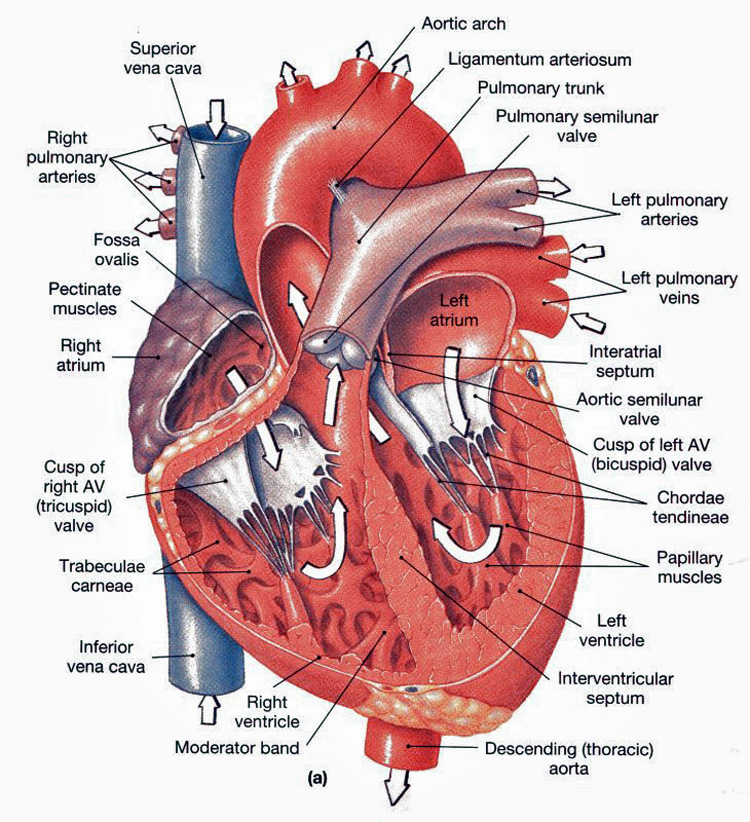
We spent the majority of this past week learning the cardiac and systemic blood flow. As it moves through the chambers of the heart, to the lungs, back into the heart and ultimately into circulation, the blood provides nutrients to the body that sustain life.

Lectures went beyond the anatomy and included cardiac histology for completeness. The physiology or functional breakdown of its parts gets quite complex. Through hormonal, neural, and metabolic control blood vessels change size to distribute the blood where it is needed most. This regulation is a core consideration for many diseases as the blood affects every body system.

During our Physical Diagnosis lab we attempted to hear the many heart sounds on our partners and associate them with the various actions that were occurring. If you have ever tried this, you will agree it is definitely a learned skill. No wonder cardiologists are consulted so often. In my research, I came upon the blog of a cardiologist/electrophysiologist from the Midwest that may be of interest to those considering cardiology as a career. Dr. Wes, as he is known, gives a great peek into the life of a specialty physician. As I am still trying to decide what field to work in, this was a good starting point to explore.

Clinical Corner

With so many cases, conditions and diseases that come up I thought this would be a good forum to mention them both for my memory and for your reading pleasure. Should you happen to find information that is incorrect or interesting that you would like to add, please leave a comment for others to read.

Atrial Fibrillation

After a week of cardiology I could not resist considering an abnormal heart condition. Of the four chambers of the heart, the two atria receive blood from the body or lungs. Blood is pumped from an atrium into a ventricle as it continues on its way. This occurs as a result of electrical activity that starts in the atrium which moves by conduction to the ventricles. In a normal functioning heart, the rhythm is synchronized to move the blood through the chambers in order.

In a heart that is experiencing atrial fibrillation the conduction system is does not effectively reach the ventricles and the atria shake erratically. This will decrease the flow of blood and ultimately oxygen to the body with a potential risk of clot formation. This commonly leaves the individual weak and uncomfortable. This is one of the commonest heart problems and can be treated with medications or more invasive procedures if necessary. This video provides a more detailed look at atrial fibrillation.

Like you have heard it before, "use it or lose it." Regular exercise and a healthy diet will keep your heart and blood vessels in shape to meet the demands of everyday activities. Don't take good health for granted and your heart will thank you.