Showing posts with label Internal Medicine. Show all posts

Sunday, February 26, 2012

The Ultimate Upgrade

This appears to be a very clean and tidy hospital room, ready for the next patient to fill its bed and utilize its healing equipment. I happened to come across it in the early morning hours on my way to see a patient assigned to my service, a patient who had occupied this bed less than 24 hours earlier.

The Morning After

I knew from the previous day that my patient was struggling to survive his declining medical condition and that it would only be a matter of time before his body decompensated. It just didn't occur to me that this particular morning would be the one I found his room void of active recovery. I was rather surprised when I passed the door mentally preparing myself to review his chart for daily rounds. This was not a novel experience for me, yet it was reason for pause in reflection of a life ended, that taught me in during his struggle to survive. Despite the frequency with which this happens, it resonates as a moment of appreciation for the health that I currently possess.

In medicine, we grapple to preserve life and health. Death is not failure in that equation, yet it is the antithesis of our goal. In fact, it may be the expectant end to the story, but our attempts at prolonging its arrival are the reason we prepare for years to work in healthcare. Sadly, it is something we have to accept as an outcome and become comfortable with despite our best efforts to thwart its occurrence. It happens and the morning I stopped in to see my patient, I could not think of a better scene than his empty bed with the light of the sun filling the corners of his room. It was serenely peaceful and appropriate. 

Question of the Week
An elderly woman, diagnosed with Parkinson's Disease, is very combative with hospital staff, refusing treatment except from her own family physician. Which of the following stages of death is she most likely experiencing?

A. Denial
B. Anger
C. Bargaining
D. Depression
E. Acceptance

Answer & Explanation

Sunday, February 12, 2012

Infectious Disease

One of the perks of emergency medicine, OBGYN and surgical rotations is wearing scrubs to work. Between these specialties and vacation it has been a year since I last wore a dress shirt and tie on my rotations. Despite being a little less comfortable, it brings a different sense of professionalism to the game.

Avoiding Disease

Currently rotating on a medicine specialty, infectious disease, I am learning more than ever before, the importance of antibacterial, antifungal, antiviral and antiparasitic medications. I knew there was a lot to know before, but I am now reminded of that fact where it counts, at the bedside. Every day we round on patients who have serious infections including tuberculosis, HIV, meningitis and more. When the patient's infection fighting army can no longer handle the battle, we are called in to bring the reserve armory. Donning special masks, gowns and gloves protects both the patient and ourselves from the exchange of harmful bugs during discussion and examination.

Washing hands is a necessity and stethoscopes are cleaned routinely on this service. If we are not careful, we can be the source of somebody's newest infection at which point it doesn't matter what your tie looks like -- keeping it secured is not a bad idea so it's not dragging through the patient's wounds and dressings. Medicine is a lot like figuring out a good puzzle, both in making a diagnosis and providing the right treatment regimen. Infectious disease aims to find the perfect medication for the job so we are not firing shotguns at thumbtacks every time building resistance to the arsenal we have available. It is a thought provoking field that can have a significant impact on patient outcomes as long as we don't let the disease bug them too much.

Question of the Week
Which of the following drug classes is responsible for both nephrotoxicity and ototoxicity?

A. Carbapenems
B. Penicillins
C. Tetracyclines
D. Aminoglycosides
E. Quinolones

Answer & Explanation

Sunday, January 30, 2011

Hospital Medicine

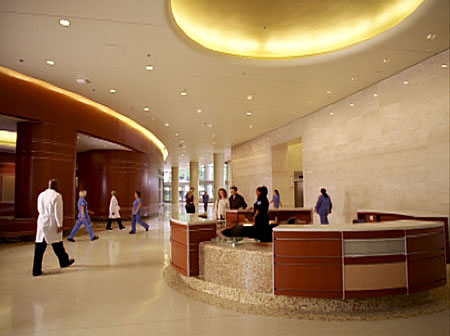
Last week concluded my time on Internal medicine. I am going to miss the inpatient experience roaming the hospital and seeing patients bedside. Despite the early, long and late hours, I am quite certain I want to work in the hospital as a physician.

Feeling at Home

I remember as a child the occasional visit or field trip to the hospital. As the doors would open, the aroma of sterility hit and the white of the halls shone. It was an environment like no other that I had experienced and it somehow seemed different. Wheelchairs, oxygen tanks and rolling beds, it was enough to get me thinking of the day I would be working in a similar place. Little has changed since then. I still feel the thrill as I step through the doors and walk the halls. Perhaps it's the nerd in me coming out, but I like to think it's my inner child telling me I am in the right place.

Knowing I wanted to be a doctor is old news. What type - is now the topic of discussion.  My usual response is to be a "good" doctor, which is possible, but I still have to choose a field of interest. At least if I am not yet decided, I can rely on knowing I want to work in the hospital setting. That decision alone eliminates a significant number of specialties. Hopefully in the next few months there will be more aha moments to clarify the path.

Question of the Week
While monitoring a 50 year old male who is short of breath, you notice his 12-lead ECG shows tachycardia and pre-excitation of the QRS complex as evidenced by a delta wave. Which of the following is the definitive treatment?

A. Cardiac glycoside (Digitalis)
B. Beta-Blocker (Metoprolol)
C. Calcium Channel Blocker (Verapamil)
D. Catheter Ablation
E. Coronary Angioplasty

Answer & Explanation

Sunday, January 9, 2011

Cardiology

Each month has provided interesting rotations. This month is no different as I am now currently working on the in-house cardiology service and trying to keep "pace."

The Heart

The 'ticker patrol' moves swiftly through the halls as a sea of white following our attending from patient to patient. It's obvious the cardiologist is concerned about his heart; early morning runs, always using the stairs, and driven to maintain a healthy diet. He sees first hand how people destroy one of the most important organs in their body simply by how they live. His brisk demeanor, lively teaching style and caring bedside manner have taught me more about being a good physician in a week than some preceptors do in a month or more. He loves what he is doing and it shows in every aspect of his practice. How appropriate for one who cares for the heart.

We feel for pulses, look for venous distention and listen for the "Lub Dub" as reassuring signs or good cardiac function. I continue to be amazed by the amount of information one can pick up from some tests, especially the electrocardiogram (ECG). This electrical picture of the heart tells a story of where a heart has been, what it is doing and what may happen if treatment is not given. Yet the ECG is only one piece of the puzzle that can be complimented by other studies and tests, all in an effort to preserve the life giving organ.

I remember the first time I performed CPR on a patient like it was yesterday. It was a child not more than 5 years old. The room was filled with so many health care providers that there was barely room to move. I was the last to attempt resuscitation efforts. Not long after I started, the parents entered the trauma suite to be with their child for the last time while the heart was pumping blood to the tissues. In between compressions I distinctly remember looking around and noticing that there was not a dry eye present. It then hit me that my compressions were no longer for the child, but for the parents who longed to have their child once more. It is no surprise that we use the heart as a symbol of love, for it carries that emotion throughout humanity.

Question of the Week

With the new year it is time to say goodbye to a rather useful resource, wikitestprep is no longer in operation. The question then is this:
What other free resources are available to students wanting to prepare for the medical licensing board exams
Please leave your answers in the comment section.

Sunday, December 12, 2010

The Choice is Mine to Make

I couldn't help but notice the mirror overhead displaying the converging intersection with an obvious "Check Out" sign. The exit always seems to be the easiest choice, because the others lead to more work, challenges and upward climb.

Uphill Both Ways

No, I'm not "checking out" of medical school, but I cannot deny the difficulty of making progress...all the time. The ascent to the finish line is steep and unrelenting. Just when you think there might be a nice little plateau ahead to cure the fatigue, you reach the bend and see the next peak in the distance. Emotionally it becomes hard to keep pace and trudge along.

This month's Internal Medicine rotation has been interesting but demanding: early morning paperwork and patient interviews to prepare for rounds, in-house nights on call, and weekend shifts. I'm still trying to squeeze in enough time to study every day and maintain some essence of normalcy. The long and early hours keep me exhausted and always looking for an opportunity to recharge before facing the next big hurdle. Driving to the hospital in the dark, rounding while the sun is out, and driving home in the dark somehow makes the days seem longer than they really are. Somewhere between sunset and sunrise, I find the needed rest to start all over the next day. Fortunately, my back continues to face the exit and my feet lead me forward despite the challenges ahead.

Question of the Week

A 58 year old man with a past medical history of hypertension presents with a cough. The medical team suspects that the cough is due to one of his anti-hypertensive medications. Which of the following is a characteristic of the best alternative drug for this patient?

A. Interference with binding of Angiotensin I
B. Interference with binding of Angiotensin II
C. Reduction of serum Angiotensin II levels
D. Decreased production of a key enzyme produced in the lungs
E. None of the above

Answer & Explanation