Showing posts with label Surgery. Show all posts

Sunday, March 18, 2012

Behind the Mask

Unless you work in an operating room, the routine of what to expect may be rather frightening and foreign. The anesthesiologist makes sure patients fall asleep and somewhere between the induction agents and analgesics there is very little remembered. It's no wonder so many are mystified by the effects of a surgeon's cold steel before, during and after an operation.

The Mystique of Surgery

Surgeon David Gelber recognized he was captivated by the operative challenge that is surgery early in his career, yet so many of his patients were unawares of what to expect. In an effort to shed light on how a surgeon is capable of cutting open human flesh, repairing pathologic organs and un-opening a patient for maximized healing, Dr. Gelber has written Behind the Mask: The Mystique of Surgery and the Surgeons Who Perform Them. While doubling as his memoir, Dr. Gelber pens a thought process from start to finish of how operative cases are approached to promote a successful outcome.

Sometimes funny, at other points emotional, the reader journeys through surgical cases and how they molded Dr. Gelber's career. Life saving operations and split-second decisions are among the many stories which depict a professionally educated approach to patient anomalies and diseases. Despite an eager attempt at simplifying the language to be read by all, I felt there existed a writing style that would be better understood by medical personnel or those familiar with basic medical terminology. Commonly, definitions were given and ideas explained, but occasionally the reader may be left confused about anatomical or medical associations. Nonetheless, the text proved to be a quick read that entertained with sophistication and matter-of-fact generalizations. I enjoyed seeing through a surgeon's eyes how he performs his duties. With this piece, the surgical unknown may no longer be cloaked in mystery as it once was, rather, it brings knowledge to the lost time and memories experienced while laying on the surgeon's operating table.

Question of the Week
An 8 year old girl comes to your office complaining of a sore throat for 3 days. Her mother reports the patient had a maximum temperature of 101.5F yesterday that resolved with Acetaminophen, no wheezing, no cough, no ill contacts and no recent travel. On exam, the patient's temperature is 100.8F, tonsils are erythematous with gray-white exudate, and anterior cervical lymphadenopathy on the left. The treatment of choice is which of the following:

A. Observation with "watchful waiting"
B. Amoxicillin with Clavulinic Acid
C. Penicillin V
D. Amoxicillin
E. Ibuprofen

Answer & Explanation

Sunday, January 22, 2012

In Stitches

Eat, sleep, and breath medicine. That's how medical school is for so many who live through it. We get so caught up in the world of bacteria and mutant cells that we forget to live a little. The years in medical school are filled with crazy first experiences and stories that we would be wise to remember forever. Some moving, others hope inspiring and then there are those that just leave you in stitches.

Medical Memoirs

It wasn't long ago that I was traveling the country with countless hours on flights and layovers. I felt fortunate and honored that Dr. Anthony Youn had contacted me about his latest publication In Stitches, his medical school memoir. It gave me something to do during those long trips and kept me amused as I could so easily relate to his medical training experiences.

Now, I'm not normally much of a reader, but I was surprisingly drawn to the reminiscing of a fellow medical professional. A clever chronology of events, short stories and laughable themes kept me reading until I finished only days after beginning. Dr. Youn's adventure, and misadventure, portrayed the development of his character through inner trials and external challenges. As a young man slaving away to make his father happy, he realized along with his father that happiness can only come from following our own dreams. Achieving big goals requires a sense of confidence, boldness and stamina; all of which develop over time through humorous and touching events.

It was the perfect time for me to read his tales as I had been through the classwork, clinicals and would soon be starting residency. As a practicing plastic surgeon, he lives in the light at the end of the tunnel that is finally coming into view for me. No matter how difficult school becomes, at least there will be some great stories in the end. I think he sums it up well in this small paragraph:
Thanks to my small circle of close friends, my focus, work ethic, and drive to succeed, I slowly grew up. I entered medical school a shy, skinny, awkward nerd with no confidence, no game, and no clue. I came out, four years later, a man.
For someone entertaining the thought of attending medical school, current students, or one just wanting a glimpse into the life of a medical student, I would recommend this memoir.

Question of the Week
When inflating the balloon on a Foley catheter what is the proper solution to use and why?

Answer & Explanation

Sunday, January 15, 2012

Medical Sub-Specialization

Returning home to Las Vegas after touring the country means it's time to go back to rotations as usual. Fully expecting to hit some of the core specialties, I was surprised when I was assigned to urogynecology as an OB/GYN rotation.

Urogynecology

Initially, I expected to be listening for fetal heart tones, delivering babies and controlling irregular menstrual cycles. When first learned of the specialty, there was not much guesswork as to the line of work we would be dealing with: incontinent women and prolapsed organs. It is so specialized, that it would be similar to finding a surgeon that only operates on right hands. The patients we see are generally very satisfied with their outcomes after surgery, probably because it changes their lives significantly.

It's exciting to think these last few rotations will move faster than any before as things are rolling downhill with great momentum. Experiencing sub-specialized medicine definitely keeps the study topics to a minimum when all I can focus on is the rank list and match. At least there are some aspects in every field of medicine that can be used in emergency medicine. So I am looking for opportunities to gain from this rotation those things that will be pertinent to my future specialty. Needless to say, but this has been a uniquely educational month with far fewer babies than I had imagined.

Question of the Week
What are the symptoms of urinary incontinence?

Answer & Explanation

Sunday, July 24, 2011

The Doctor Behind the Curtain

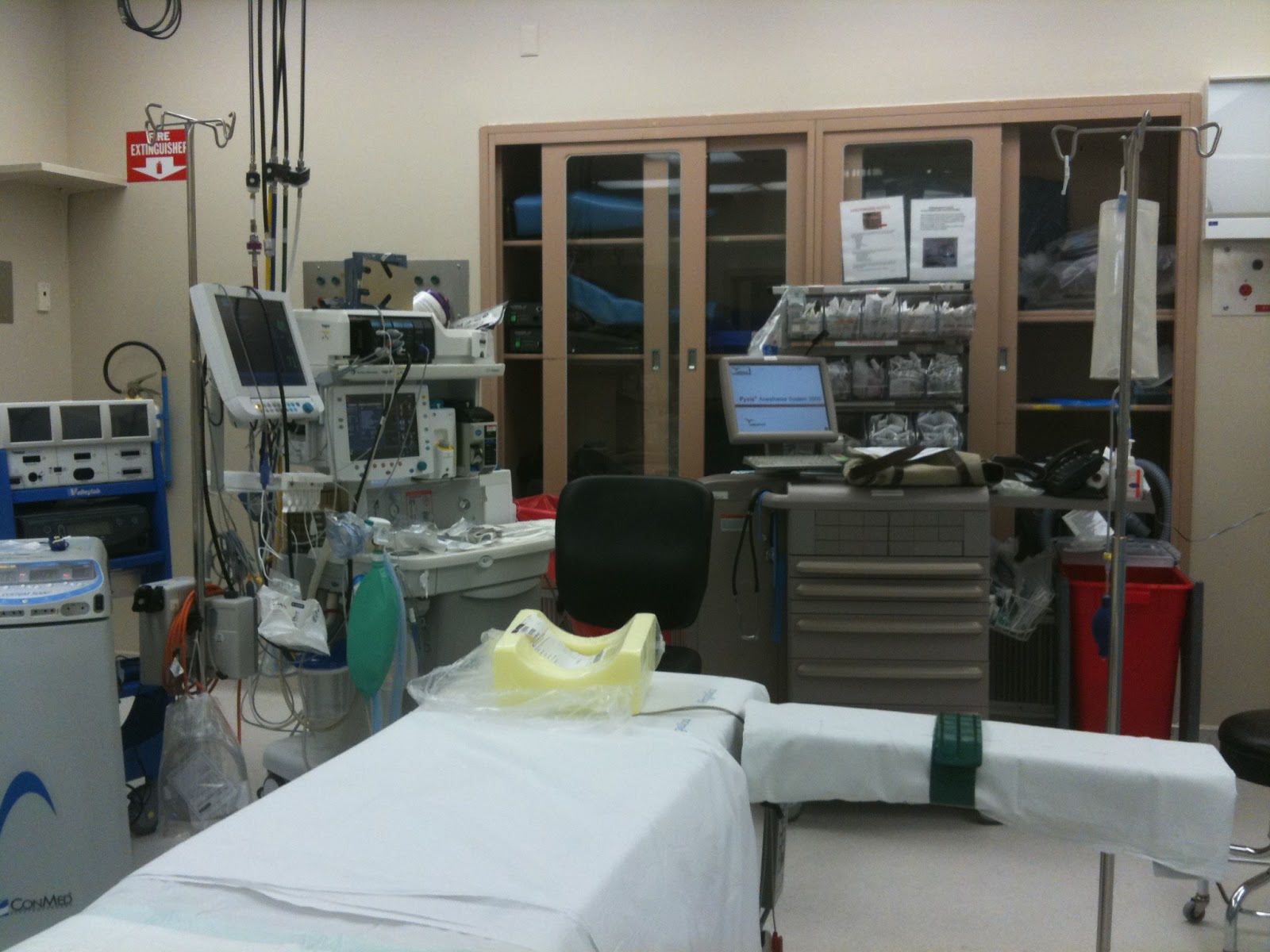
As the month comes quickly to a close, I reflect on the time I had in the operating room that was definitely an enjoyable experience. At first glance it looks overwhelming, but in time the buttons and monitors have started to make sense. It is no wonder that there is a dedicated individual at the head of any operating table managing a patient's life.

Sweet Dreams

There is much more to anesthesia than putting tubes here and wires there. As the photo demonstrates, there is one tower for monitoring the patient while providing life support and another for the medications that assist in that effort. Poles for fluid resuscitation, suctioning for secretions and gizmos for I don't know what that keep a patient happily asleep. It is amazing that so many tools, gadgets and devices can be crammed into such a small space and have such a large impact. There is barely enough room back there for the physician let alone a student to participate and learn. Despite the lack of space, the attendings continually let me interact with intubations, monitoring and interventional  procedures to get the full experience. These docs run a great one-man show and are so full of knowledge that I often could not keep up.

This niche in medicine will apparently have a 15,000 physician shortage in the year 2020. I hear medical students clamoring to get on board and it seems that the doors may be opening for them. From the physicians who tout the profession, they share their opinion as though it is medicine's best kept secret. They manage only one patient at a time who they rarely seen again, earn a significantly comfortable salary, and between the induction/emergence phases of anesthesia have few complications. On more than one occasion I have noted the relaxed and stressless demeanor of these specialists to be common for the profession. But when patients are in distress, these doctors are collected enough to help carry a patient through more often than not. It has been a good month with plenty to learn.

Question of the Week
A 30 year old male presents to the emergency department with muscle rigidity and dyskinesias. You notice he is mute, incontinent, in and out of consciousness, and febrile. He is diagnosed with neuroleptic malignant syndrome. Which of the following would be least useful in the treatment of this patient's symptoms?

A. Admission to the hospital
B. Replenishment of IV fluids
C. Administration of bromocriptine
D. Administration of dantrolene sodium
E. Administration of haloperidol

Answer & Explanation

Sunday, July 10, 2011

The Art of an Operating Room

For whatever reason, I missed out on a general surgery rotation in my third year of medical school. It was replaced by random surgical specialties which were educational, but did not cover the basics of surgery. Now that I am rotating with anesthesia, I am seeing a larger variety of surgery than I could have imagined.

Effects of Cold Steel

In only a week's time I have observed surgeries from head to toe and everything in between. Some abbreviated and others extensive. All bring their own sense of fascination as they are usually a definitive treatment for the patient's particular condition. On numerous occasions I was able to witness cases that I thought were simply for the textbooks; in other words, those that rarely make their way into the operating room. Skin grafting, thyroglossal duct cyst removal, gangrenous cholecystectomy, thoracotomy, colectomy, craniotomy to name some that have stood out. After meeting up with the anesthesiologist and putting the patient to sleep, I stick around if the case has some educational appeal. Since I never had the traditional general surgery rotation, I am doubling up this month to get the most possible from this experience.

Life in the O.R. is an array of medical art. Everyone has a role and moves to fill it with precision. The colors of contrasting sterile blue against blood red seem to glow under the lights while everyone mysteriously peers over their masks. Instruments shimmer in cleanliness as they move to and from the operating field. The sounds of monitors keeping pace, instruments doing their job and personnel collaborating fills the silence creating an ambient effect. In concert everyone works together to see that the patient has a positive outcome. It's a beautiful place to observe and learn, it's a place where things get done. 

Question of the Week
A febrile 12-year-old child presents with severe right lower quadrant
pain that is interpreted by the attending physician as acute appendicitis.
The patient has also been complaining of joint pain. At laparotomy, the
surgeon notes that the appendix is normal; however, the mesenteric lymph
nodes are markedly enlarged and contain focal areas of microabscess
formation on cut section. This patient is most likely

A. An asthmatic
B. Deficient in C1 esterase inhibitor activity
C. HLA-B27 positive
D. Leukopenic
E. Serologically positive for toxoplasmosis

Answer & Explanation

Sunday, July 3, 2011

Anesthesia 101

After introducing myself to the anesthesiologist I would be working with for the day he quipped, "I'm not an intubation monkey, you are going to learn something this month." With many years under his belt and all the students he has seen, I had a feeling he was speaking from experience. He taught and I learned from the best writing space available, his knee.

Moving Forward

Some have said that fourth year is the apology for the first three years of medical school. We get more freedom to explore our interests and roam about the country finding residency programs worth our time. At last we get a little autonomy and it was for this reason I chose to do anesthesia early in my fourth year. Since I plan to go into emergency medicine, it will help me with sedations, analgesia, medications and airway management via intubations. (Apparently, Dr. Anesthesiologist saw right through that one.) Fortunately, I had no problem with the first tube of the day and we were rather productive as far as teacher and student are concerned.

It seems that for the most part, anesthesia is a calm environment at the head of the table hidden behind the sterile drapes. It consists of mostly monitors, charting and pharmacologic management of the surgical patient. On rare occasions things get a little hairy and I was fortunate enough to experience one such event on the first day. Fortunate because it brings a new understanding to the profession. The patient was dying and the anxious surgeon was eager to start the case. But before anything could happen the patient needed to be resuscitated or the surgery would be futile. Tensions ran high for a short time, but through focused efforts the patient responded to treatment and the surgery was performed as planned with no complications.

Every rotation seems to have significant learning potential and I doubt this one will be any different. I look forward to a busy and productive fourth year. It also happens to be my last year as a tuition paying student which is quite a happy thought.

Question of the Week
A patient becomes cyanotic, has profuse sweating, an unstable blood pressure, and a temperature of 106°F two to three minutes after induction of general anesthesia with halothane. Appropriate intervention would consist of respiratory support and the administration of which of the following?

A. Succinylcholine
B. Dantrolene
C. Acetominophen
D. Hydrocortisone
E. Epinephrine

Answer & Explanation

Sunday, April 10, 2011

Life as a Patient

Finally nearing the end of my hospital stay, I have gleaned a great deal of information and experienced my share of ups and downs. Surgery was a difficult experience as it left me with pain, wounds, and the after effects of anesthesia. Being in the ICU with all of its high-tech glory was much less fun than I remembered from rounds.


Post-Operative Recovery

Fortunately, I was able to avoid catheterization. Nonetheless, the anesthetics had a long lasting effect that disturbed both my gastrointestinal and urinary tracts. Every time I tried to drink fluids, my stomach would have nothing to do with it. I had to keep the emesis container within reach as there was no way of judging how my body would react. It was more annoying than anything as the cottonmouth was rather unpleasant. Between medicated naps and side aches from my freshly placed chest tube, all I could do was wait for the anesthesia to wear off with my barf bag in hand. Learning to adjust to my new wounds and pains was going to take some time, and all I could do was wait. As the clock rolled, I became hungrier and dared to try solids. It tasted good, went down well and sat well...but only for 10 minutes. It was then that I wished I had an emesis bag the most; a simple device I could put on and forget about. Luckily, it became easier to hold the food in and now I had to get my bladder to cooperate. With some serious concentration, faucets running and a friendly coaxing from my visitors, the bladder situation was overcome in due time.


Little did I know that the next few days would be worse. Inflammation, muscle aches, tubes, wires, medications and the list goes on. Now I was starting to understand what my post-operative patients had been experiencing. From one unpleasant experience to the next, I was now on the doctor's schedule awaiting instructions and decisions. My job was to report any problems, stay attached to all my wall connections, exercise my lungs and generally get better. I was happy to hear I was the most stable patient on the ward, which was to be expected as I was also the youngest. The TV was boring, my neighbor's moans annoying and the food not always appetizing. Getting up and walking around the unit was the most enjoyable activity I participated in during my stint. Something we so easily take for granted had now become the highlight of my day. At last discharge is in sight and I can soon recover in the comfort of my own home. This experience, however, has made a significant impact on my perception of health care and the way I intend to approach my future patients. What a great way to spend my vacation month.

Question of the Week
As a new patient on the surgery ward you are asked by the dietitian make your next meal order. Which of the following will have the worst effect on your health and recovery?

A. Turkey roast with mashed potatoes and broccoli
B. Chicken fingers and French fries
C. Meatloaf with mixed vegetables and a dinner roll
D. Shrimp pasta alfredo with garlic bread
E. Chicken salad wrap with clam chowder soup


Answer & Explanation

Sunday, March 13, 2011

Orthopedic Surgery

Although it may appear as though I am on my way to play virtual Tron or that I have the worst dental apparatus around, this little device was quite fascinating to myself, the naive student on orthopedic surgery.


Surgical Expectations

My first day in the operating room was a little of what I expected and a lot of what I hadn't. When they handed me a helmet, I thought perhaps I was about to be the brunt of a prank. It was legit and even had a nifty battery pack to boot. When we scrubbed in they attached the bio-hazard-like helmet cover to keep us sterile. It was quite comfortable inside with a little fan to keep the air flowing in the hood almost like a personalized air conditioning device. Apparently, with the amount of fluid and debris flying during orthopedic procedures, this is a rather important device. Thankfully I didn't sneeze on my little window, but the runny nose was on full display for everyone else as there was no way to get a tissue inside the hood.

I did expect to see hammering and the use of a chisel, after all this is orthopedics. I did not expect to see the jackhammer that was used to prepare for the femoral implant, however. It was akin to something out of a horror movie. The team and I held open the hip while the doctor got to work. As could be expected for any medical student, I held the retractors long enough that my hands ached with pain and lost sensation from the lack of blood. Fortunately, there was enough movement and hands available throughout the procedure to avoid too much damage. Being the new medical student on board meant I wasn't expected to know much. If it wasn't for the scrub nurse, I am rather certain I would have had no idea what instruments to use during the procedure. In the end, it was a great learning experience and now I kind of want one of those helmet and hood devices to brave the Las Vegas heat.

Question of the Week
A 70 year old women has recently been operated on for a total right hip arthroplasty. All of the following are appropriate prophylaxis for deep-vein thrombosis EXCEPT

A. Warfarin
B. pneumatic compression boots
C. subcutaneous low molecular weight heparin
D. intravenous heparin
E. Aspirin

Answer & Explanation