Sunday, August 28, 2011

Education Beyond the Classroom

Learning the tricks of the medical trade comes from lots of exposure to lectures, books and hands-on experience. Initially we are expected to be attentive to professors who create a basic foundation and then pick up the rest on our own time through personal study and discussion with colleagues. When it comes to the clinical setting, the direct form of teaching dissipates and we carry more of the responsibility to be self taught. Yet there remains plenty of room for a student-teacher relationship. [Classroom at the Washington University School of Medicine 1943]

Learning Through Respect

In speaking with one of the residents at the program I am visiting, he reminded me that not all physicians remember what it is like to be a student. They have forgotten the basics and want to be identified as one who no longer has to be "at that level" of training. In doing so they often seem to have a chip on their shoulder, teach very little to students and ignore even the existence of students trying to be friendly. So doctor, my morning greeting was not an attempt to waste a breath of air, it was intended to be pleasant and acknowledge your existence in hopes that perhaps you would acknowledge mine. Little things like that are what really set a tone in my opinion. It standardizes a sense of mutual respect and understanding allowing for potential growth beyond that point. Maybe it is perceived as a "brown-nosing" tactic wherein I am gunning for a response. Whatever the case, I thought it was a simple common gesture in human interaction. What do I know, I am just a medical student.

Medical students just learn to grow thick skin. Patients give you grief because you are the first person willing to listen to their complaints and desires. After hearing out the patient, the student finally presents to the residents who are the first to think you have set them back because "you must have been delivering a baby in there." If you are not thinking what they are thinking, they will let you know without hesitation that you are wrong. But this mode of action comes from their superiors too. The attendings are looking at them in a similar light but may not always say so out loud. So it only makes sense that the residents become calloused and project their troubles onto the medical student who will smile, be pleasant and always take a verbal lashing for the ever coveted passing grade. All the while the student is thinking, "why do I pay good money to be demoralized in front of patients and coworkers?" We know our end goal and will walk through the gauntlet to get there, even if that means we will be red in the face a few times.

Once in a while, however, there are those who will remember the emotional strain medical students experience. In their wisdom, the residents will slow down and teach or maybe even learn something because we are all in this together. What one person may have recently studied, the other has not heard in a while. This resident remembers the efforts students are making to impress and succeed even if they fall short once in a while. The effects of the classroom extend beyond those four walls into the community and clinics. It has the potential to reside within each relationship we have for better or for worse. I refuse to let my education be compromised by those who have forgotten how a patient teacher can influence an eager student.

Question of the Week
A 24 year old medical student admires and begins to pattern her life after her surgical mentor. Which one of the following defense mechanisms does she exhibit?

A. Introjection
B. Projection
C. Rationalization
D. Identification
E. Conscious Control

Answer & Explanation

Sunday, August 21, 2011

Peanut Butter and Jelly


The gourmet classic of any medical student is obvious; one slice of bread slathered in fruity preserves married to another slice plastered with smashed peanuts. It’s the “go-to” of meals when the cereal box has poured its last bits or the milk carton has gone dry.

The (Un-Starving) Nourished Student

Available on my shelf of kitchen space I have a small variety of cold cereals, half a loaf of bread, half a container of peanut butter and a can of beans. The half shelf in the refrigerator is barely enough room for a half gallon of milk, a handful of bananas, celery and a few remaining hot dogs. The granola bars are used to stock my work bag in case of a snack attack and I have some Tootsie Rolls to complement my meals as a small dessert. There is no question that my in-house meals are lack-luster and definitively not the most nutritious. The occasional meal is had at the hospital or a fast food joint on the way there which is surely not helping my case. I am just now realizing that I don’t even have said jelly on hand…how pathetic is that?!

Just when you thought medicine was about teaching healthy habits, you notice that those who teach it are having a hard time following the rules. Certainly, this does not go for every student as the outliers exist, but if you ask, there is commonly a stock of supplies to make the most basic of meals. Whether short on time to prepare meals, no desire to eat healthier, or an attempt at saving money we are probably not properly filling our fuel reserves. One student I work with is staying in a local hostile making the effort to find the nearest free meal even if it means walking into a nearby hotel for their continental breakfast! The best counsel I heard a while back: “somewhere there is a free lunch, and it is my job to find it.” It holds true, but when the advice proves futile I return to my meals of simplicity with minimal ingredients and little variety. So Mom, no need to worry, I am being fed and there is something from every food group.

Question of the Week

A known alcoholic man presents to the emergency department showing signs of confusion, unsteady gait and horizontal nystagmus. Upon questioning he tells you he does not remember much about the day but just finished eating a meal fit for a king. What is the first step in treatment and what structures are likely being affected?
A. IV glucose, mamillary bodies
B. IV thiamine, hippocampus
C. Oral glucose, hippocampus
D. IV thiamine, mamillary bodies
E. Disulfiram, amygdala

Answer & Explanation

Sunday, August 14, 2011

Digital Medical Instruments for Your Phone

The effect of the smartphone on technological advances is undeniable. With apps for everything these days people are expanding to a peripheral market to expand the functionality of smartphone products. If you are in medicine, there are some fun gadgets you might consider adding to your black bag arsenal of portable instruments.

Smartphone Adjuncts

Of course you could use your phone as a reflex hammer, but that is just not as exciting as having a few gadgets and gizmos on hand. So if you are looking for a medical gift or something to put on your wish list you might consider some of these ideas that are sure to draw some attention from your coworkers. Many of these have either received FDA approval or are in the process of doing so and will be available for purchase soon. The majority of these devices are expanding use beyond the Apple operating system so keep an eye out for developments if you do not already use the iPhone.

Stethoscope
  • Price - $90
  • Designed for iPhone/iPod but it looks like it would function in any headphone jack
  • App not needed
  • Other - iStethoscope Pro app ($0.99), Does not require attachment
Pulse Oximeter
  • Price - Unknown
  • Designed for iPhone and works with Android, Windows etc
  • App required
 Blood Pressure Monitor
  • Price - $130
  • Designed for iPhone, iPad and iPod
  • App required
Electrocardiogram (ECG)
  • Price - Less than $100
  • Designed for iPhone and iPod Touch, plans to be available for other operating systems
  • App required
Blood Glucose Monitor
Dermatoscope
  • Price - $1,200
  • Designed for iPhone 4
  • App required ($5.00) Compatible on iPhone, iPad and iPod Touch. Can be used without the attachment.
Ultrasound
  • Price - $7,500
  • Not currently available on a smartphone but expected to integrate that function eventually
  • Available only to medical professionals and comes with visualization device
The practicality of some of these devices is obvious. When traveling or doing house calls to friends and family they could definitely be useful to have on hand. If you are aware of any similar products, I would love to add them to the list. Please take a minute to comment on them below with any information you have found.

Question of the Week
A mother brings in her 3 year old child for a well-baby office visit. She is concerned her child is not progressing normally because he has not memorized his own name, address and phone number? You explain that children are expected to obtain these skills at which of the following ages?

A. 12 months
B. 3 years
C. 5 years
D. 7 years
E. 9 years

Answer & Explanation

    Sunday, August 7, 2011

    Anti-Medical Meanderings

    All this humid weather has kept me under a fan, in the air conditioning and rarely outside. The times when I am exposed to the elements are usually reserved for travel to my clinical site, exercise and exploration. Here in Miami Beach there is plenty to explore especially since I am coming from a desert.

    Beautiful Exploration

    Taking time out of an already busy schedule to investigate a new location is not always easy, especially when time is limited. When traveling to rotation sites out of my home city, I like to get an idea of what the community has to offer and what attractions may be in the area. On a day off, I drove to the Florida keys. I've always been curious about the tropical environment there with its long stretches of road linking numerous islands. Beautiful skies were complemented by the temperate waters and lush greenery. It was a short lived getaway that I needed. Upon my return to the mainland I pit-stopped on one part of the seemingly never ending beach. The entire coast is Atlantic Ocean beach front covered with tourists, towering resorts and one of the nicest boardwalks I've experienced. City life is bustling and the art deco facades a glimpse of times past. This is definitely a colorful place to experience medicine as the hospital caters to those who live and play here.

    Traveling to places unknown is a challenge when adjusting to the newness of lifestyle and environment. If the residency match places me here, it's nice to know what I am getting myself into. To me that makes the exploratory day trip worth the effort. Getting a sense for the people and their mentality in and outside of the medical setting is key to making what will be a life influencing decision. On the flip side, this is Miami and summer, I don't know how I could have come here and not experienced what this place has to offer! Living among the locals definitely helps get an idea for what there is to do and see. In exchange for all of this I have to learn to live with the humidity which has been tougher than I imagined.

    Question of the Week
    An 8 year old boy with rapidly deteriorating cognitive function is not oriented to time, person, or place. On exam he has nuchal rigidity and a high fever. His mother tells you that he has been swimming in a lake at a campground in Florida. You diagnose the boy with meningoencephalitis. Which of the following represents the most likely infectious agent?

    A. Neisseria meningitidis
    B. Haemophilus influenzae
    C. Streptococcus pneumoniae
    D. Naegleria fowleri
    E. Mycobacterium tuberculosis


    Answer & Explanation

    Sunday, July 31, 2011

    The Start of Audition Rotations

    Let the audition rotations begin. Catching the red eye flight from Las Vegas to Miami was not exactly my idea of fun. Nonetheless, I arrived safely and got a sneak peak at where I will be spending the next month. Literally feet from the water, Mt. Sinai Medical Center serves Miami Beach meeting numerous medical needs.

    Beach-side Medicine

    I was amazed at the number of memorial wings, buildings and structures. This hospital has a long history of providing health care in the community which was demonstrated by the banner at the front entrance sharing the recent news that it provides the best care in geriatrics. This comes as no surprise since the population of retirees is so saturated here. In my brief exploration of the surroundings, however, I did not see too many seniors bathing in the sun and shopping around town. Perhaps I was not on the right side of town. So now I am curious as to who the hospital patient population will be; international tourists, retired seniors or partying youth.

    Every hospital tends to have a unique population set. Some see greater numbers of indigent, immigrants, aged or affluent people. Testing the waters now as a medical student will help me when the time comes to make a residency rank list. Knowing what a program has to offer both in academics and patient presentation can have a significant impact on the education to be received. Fortunately, the programs that are weak in one part of the population often send residents to other facilities to get the exposure needed. Until I actually start my shifts, I suppose I will have to remain in suspense and get used to the humidity we rarely get in the desert. 

    Question of the Week
    A mother brings in her 10 month old child after what she thinks was a seizure. She reports that he was premature and has a history of broken ribs at 6 months of age. On exam you notice his hair to be steel colored and brittle. He appears very malnourished and small for his age. You correctly diagnose him with Menkes disease which has a deficiency of which of the following?

    A. Copper
    B. Biotin
    C. Zinc
    D. Niacin
    E. Pyridoxine

    Answer & Explanation

    Sunday, July 24, 2011

    The Doctor Behind the Curtain

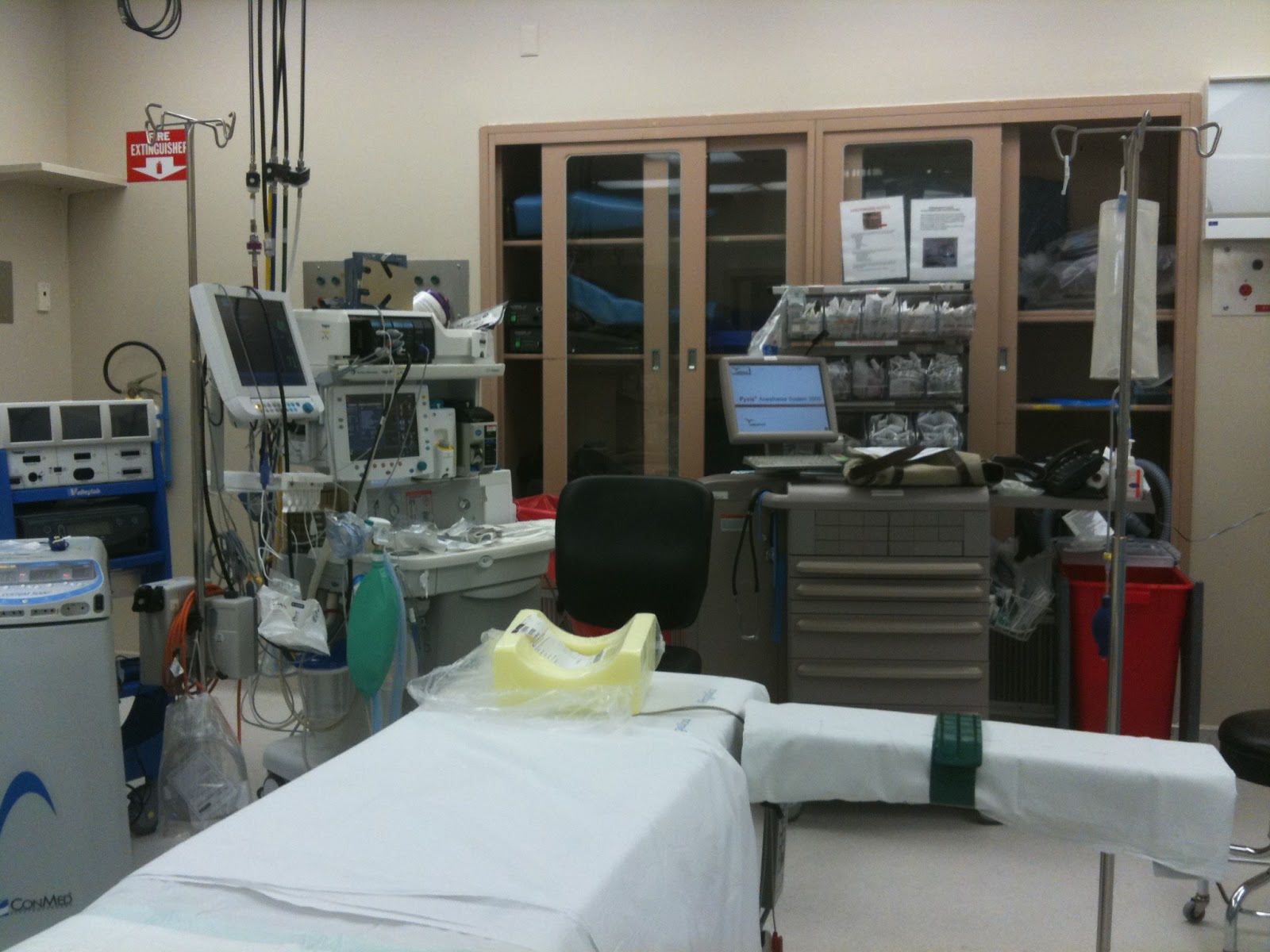
    As the month comes quickly to a close, I reflect on the time I had in the operating room that was definitely an enjoyable experience. At first glance it looks overwhelming, but in time the buttons and monitors have started to make sense. It is no wonder that there is a dedicated individual at the head of any operating table managing a patient's life.

    Sweet Dreams

    There is much more to anesthesia than putting tubes here and wires there. As the photo demonstrates, there is one tower for monitoring the patient while providing life support and another for the medications that assist in that effort. Poles for fluid resuscitation, suctioning for secretions and gizmos for I don't know what that keep a patient happily asleep. It is amazing that so many tools, gadgets and devices can be crammed into such a small space and have such a large impact. There is barely enough room back there for the physician let alone a student to participate and learn. Despite the lack of space, the attendings continually let me interact with intubations, monitoring and interventional  procedures to get the full experience. These docs run a great one-man show and are so full of knowledge that I often could not keep up.

    This niche in medicine will apparently have a 15,000 physician shortage in the year 2020. I hear medical students clamoring to get on board and it seems that the doors may be opening for them. From the physicians who tout the profession, they share their opinion as though it is medicine's best kept secret. They manage only one patient at a time who they rarely seen again, earn a significantly comfortable salary, and between the induction/emergence phases of anesthesia have few complications. On more than one occasion I have noted the relaxed and stressless demeanor of these specialists to be common for the profession. But when patients are in distress, these doctors are collected enough to help carry a patient through more often than not. It has been a good month with plenty to learn.

    Question of the Week
    A 30 year old male presents to the emergency department with muscle rigidity and dyskinesias. You notice he is mute, incontinent, in and out of consciousness, and febrile. He is diagnosed with neuroleptic malignant syndrome. Which of the following would be least useful in the treatment of this patient's symptoms?

    A. Admission to the hospital
    B. Replenishment of IV fluids
    C. Administration of bromocriptine
    D. Administration of dantrolene sodium
    E. Administration of haloperidol

    Answer & Explanation

    Sunday, July 17, 2011

    Being Prepared

    While sitting at my desk peacefully studying for the upcoming board exam, I heard the rubber of tires sliding across pavement punctuated by an unmistakable thud. Someone hit something and it was right outside my door. I jumped into action having no idea what I would find, and relying on the limited medical training I already had. 

    Responding Empty-Handed but Full-Headed

    It didn't take long to realize that the young man driving was distraught by the apologies he was spewing at the man who lay on the ground in pain and shock. To make things worse, the man's dog was only feet away showing no signs of life. With no traffic around, I made my way to the middle of the intersection as a first responder to assess the situation. Two patients: both alive, one clearly injured and the other in a state of hysteria. The police arrived shortly thereafter to control traffic, call for medics and calm the driver. My training took over and after a quick introduction to the injured man I began a rapid trauma assessment looking for injuries from head to toe. Once it was determined that there were no obvious life threats, I focused on those things that he could identify as bothersome. With no equipment to dress his wounds, I started taking a medical history to keep his mind off of the loss of his dog and to provide the medical crew when they arrived. It was sad to see the aftermath of an unintended event and I can only imagine how it will change their lives forever.

    Moments such as this benefit from the "what if" game I have played so often. Never knowing when I will have to use my training keeps me in a constant state of preparedness. It's an awful thing when people become injured or ill, but knowing how to help in that time of need is a comforting feeling. A feeling that I would rather have than that of helplessness when it matters most. I will likely never hear from the individuals involved in this particular incident, but the satisfaction of being prepared was fulfilling enough to know that I am slowly learning that which I need to and understanding how to apply it in practical situations. It was another affirmation that my pursuit of emergency medicine is not in vain.

    Question of the Week
    All of the following are surgical emergencies EXCEPT:

    A. A tense swollen foot that was run over by a car. There are no fractures but the patient is in severe pain and has pain with passive toe extension.
    B. A tibia fracture with a small pinhole in the skin over the fracture site that drains blood containing fat droplets.
    C. A knee dislocation with no fractures, but a cold pulseless foot.
    D. A supracondylar humerus fracture in a ten-year-old with decreased sensation in the median nerve distribution.
    E. A distal radius fracture in a five-year-old with obvious visual deformity and intra-articular displacement.

    Answer & Explanation

    Sunday, July 10, 2011

    The Art of an Operating Room

    For whatever reason, I missed out on a general surgery rotation in my third year of medical school. It was replaced by random surgical specialties which were educational, but did not cover the basics of surgery. Now that I am rotating with anesthesia, I am seeing a larger variety of surgery than I could have imagined.

    Effects of Cold Steel

    In only a week's time I have observed surgeries from head to toe and everything in between. Some abbreviated and others extensive. All bring their own sense of fascination as they are usually a definitive treatment for the patient's particular condition. On numerous occasions I was able to witness cases that I thought were simply for the textbooks; in other words, those that rarely make their way into the operating room. Skin grafting, thyroglossal duct cyst removal, gangrenous cholecystectomy, thoracotomy, colectomy, craniotomy to name some that have stood out. After meeting up with the anesthesiologist and putting the patient to sleep, I stick around if the case has some educational appeal. Since I never had the traditional general surgery rotation, I am doubling up this month to get the most possible from this experience.

    Life in the O.R. is an array of medical art. Everyone has a role and moves to fill it with precision. The colors of contrasting sterile blue against blood red seem to glow under the lights while everyone mysteriously peers over their masks. Instruments shimmer in cleanliness as they move to and from the operating field. The sounds of monitors keeping pace, instruments doing their job and personnel collaborating fills the silence creating an ambient effect. In concert everyone works together to see that the patient has a positive outcome. It's a beautiful place to observe and learn, it's a place where things get done. 

    Question of the Week
    A febrile 12-year-old child presents with severe right lower quadrant
    pain that is interpreted by the attending physician as acute appendicitis.
    The patient has also been complaining of joint pain. At laparotomy, the
    surgeon notes that the appendix is normal; however, the mesenteric lymph
    nodes are markedly enlarged and contain focal areas of microabscess
    formation on cut section. This patient is most likely

    A. An asthmatic
    B. Deficient in C1 esterase inhibitor activity
    C. HLA-B27 positive
    D. Leukopenic
    E. Serologically positive for toxoplasmosis

    Answer & Explanation

    Sunday, July 3, 2011

    Anesthesia 101

    After introducing myself to the anesthesiologist I would be working with for the day he quipped, "I'm not an intubation monkey, you are going to learn something this month." With many years under his belt and all the students he has seen, I had a feeling he was speaking from experience. He taught and I learned from the best writing space available, his knee.

    Moving Forward

    Some have said that fourth year is the apology for the first three years of medical school. We get more freedom to explore our interests and roam about the country finding residency programs worth our time. At last we get a little autonomy and it was for this reason I chose to do anesthesia early in my fourth year. Since I plan to go into emergency medicine, it will help me with sedations, analgesia, medications and airway management via intubations. (Apparently, Dr. Anesthesiologist saw right through that one.) Fortunately, I had no problem with the first tube of the day and we were rather productive as far as teacher and student are concerned.

    It seems that for the most part, anesthesia is a calm environment at the head of the table hidden behind the sterile drapes. It consists of mostly monitors, charting and pharmacologic management of the surgical patient. On rare occasions things get a little hairy and I was fortunate enough to experience one such event on the first day. Fortunate because it brings a new understanding to the profession. The patient was dying and the anxious surgeon was eager to start the case. But before anything could happen the patient needed to be resuscitated or the surgery would be futile. Tensions ran high for a short time, but through focused efforts the patient responded to treatment and the surgery was performed as planned with no complications.

    Every rotation seems to have significant learning potential and I doubt this one will be any different. I look forward to a busy and productive fourth year. It also happens to be my last year as a tuition paying student which is quite a happy thought.

    Question of the Week
    A patient becomes cyanotic, has profuse sweating, an unstable blood pressure, and a temperature of 106°F two to three minutes after induction of general anesthesia with halothane. Appropriate intervention would consist of respiratory support and the administration of which of the following?

    A. Succinylcholine
    B. Dantrolene
    C. Acetominophen
    D. Hydrocortisone
    E. Epinephrine

    Answer & Explanation

    Sunday, June 26, 2011

    Things I Wish I Knew - Third Year

    And now for one of my favorite posts of the year; taking a look back at everything I have experienced and attempting to come up with a few things that helped me succeed. I would like to invite you to share your input as I may have overlooked a number of useful ideas. As in years past, I am including my weekly intensity chart.

    The Year Reviewed

    I will be the first to admit that this year's intensity chart has little benefit to anyone but myself. Everyone experiences rotations in different orders and each has a varied feel depending on site, preceptor and specialty. For the most part it was on a steady continuum. The occasional peaks and troughs were likely tests or vacations respectively. The large dip representing my vacation month when I was recovering from surgery and the recent peaks reflecting weeks that I left nothing to chance on elective rotations in emergency medicine. These later markings also show stress that has been mounting in anticipation for board examinations. Without further delay, below are those things which I wish I knew coming into third year.
    1. Maintain an open mind - Every specialty has something to offer, even if you are not enthusiastically interested in the field. You never know when a lesson learned from a particular patient will come in handy on another rotation or even later in your career. There is always something to be learned, even if you are not fascinated by the work before you.
    2. Participate actively - It is easy to observe and nod your head when preceptors carry about their normal activities. Encourage them to teach by asking thoughtful questions or volunteering to participate in procedures. One night during my studies I watched how to place a central line only to be asked the following day if I knew the steps. Because I was familiar with the procedure I was given the opportunity to place the line and have been entrusted numerous times since then. Always be ready to step in to answer questions or use your hands and actively learn.
    3. Avoid easy rotations - Every now and then it is nice to have a rotation that demands less, but too many of these can be detrimental. This is the best time to interact with patients, perform procedures and learn from attendings. We pay good money to be in clinics and hospitals, why read about the diseases when they are in the room next door ready to be seen first hand. Even if you are on an "easy" rotation, push yourself to take advantage of the little time you are there, you can read later when you get home.
    4. Pace yourself - There is more information than you can possibly consume in a few short weeks about any one subject. Start studying the specialty early on in the rotation and regularly review the "bread and butter" topics. By the end of your time there you may become exhausted when shelf exams are just around the corner. Cramming for the end of rotation exams is not going to help you in your career as much as regular study.
    5. Enjoy your time off - It is really easy to get swamped by the books, board exams and stress of preparing for residency. There is a little more time in third year to break away from school and it can be a perfect therapy for all the stress that will inevitably mount. Be sure to have regular time set aside for exercise and breaks. Work hard, play hard.
    Question of the Week
    A 67 year old male patient presents with mild confusion, diarrhea, and a new skin rash. These symptoms have been present for 1 week according to the patient's wife. What is the most likely nutritional deficiency that this patient is experiencing?

    A. Vitamin B1
    B. Vitamin B2
    C. Vitamin B3
    D. Vitamin B5
    E. Vitamin B6


    Answer & Explanation

    Sunday, June 19, 2011

    Good News Test Results

    Despite the normal challenges of being on rotation, this week had at least one positive outcome. Like the good ol' days when report cards made their way to the refrigerator door, so did the test results of my most recent exam. It was partly for nostalgic effect and partly because this was by far the most expensive exam I had ever taken. Tabulated expenses were a total of $1,500!

    COMLEX Level 2 PE

    Being that this test was among the medical school series of board exams, it comes as no surprise that the results were a relief. The examination itself was not horrific, but the cost was ghastly. I was more worried about having to fork out another payment than studying all over again should I have to retake it. I now feel one step closer to graduation and have only one more exam remaining to make it out of medical school as a doctor. That is a really good feeling that is going to be much better when the next board examination is behind me.

    Preparing for the exam was not as difficult as I expected. Classmates and I would get together a couple times each week for a month and perform timed practice scenarios from the book First Aid for the USMLE Step 2 CS. Taking turns as patient and doctor, we slowly got into a rhythm that would set the pace for exam day. The video orientation on the NBOME website provided test site details that helped to plan resources and expectations on test day. The rest was a matter of showing up for the exam on time and keeping calm. Faster than I expected, the day was over and weeks later I have my passing grade. Two board exams down, one more to go.

    Question of the Week
    A 19 year old male comes to your clinic complaining of a sore throat with no cough for the last three days. Vital signs are normal except an elevated temperature. On exam you note the patient has "kissing tonsils" with exudate and cervical lymphadenopathy. If this patient did not receive treatment at this time, he would be at risk for which of the following conditions?

    A. Subacute Sclerosing Panencephalitis
    B. Wegner's Granulomatosis
    C. Membranoproliferative Glomerulonephritis
    D. Rheumatic Heart Disease
    E. Chédiak–Higashi Syndrome

    Answer & Explanation

    Monday, June 13, 2011

    Providing Fresh Air

    I have yet another first to add to my list of many as I trudge along the med student life. Like many, this one is procedural. In emergency medicine the procedures continue to accumulate the longer you are there. I think it falls into the "see one, do one, teach one" mantra.

    Rapid Sequence Intubation

    With little success at my previous attempts, intubations were starting to concern me when I could only see the epiglottis and no vocal cords. That was the closest I came before patients would start to lose oxygen and the attending moved in to finish the job. After wondering why I was going to an extra shift last week, I was glad it fit into my schedule. We had a patient with respiratory distress needing rapid intubation. Despite their predetermined status as a "difficult" airway, my attending gave me the opportunity to perform the skill. Focused and determined to finally have a successful intubation, I meticulously placed the endotracheal tube on my first attempt...in the right place! In a specialty where airway management is critical and a career of it ahead of me, it is nice to see where my first success actually occurred.

    The physician with whom I was working mentioned the day before, "you have to respect the difficult airway." Although I may not completely understand that statement at this point in my career, I know that the skill is important enough to appreciate pitfalls and workarounds. My extra shift turned out to be rewarding on this particular occasion. A simple procedure to some happened to be another milestone in my book.

    Question of the Week
    A dialysis patient has missed their routine treatment and is now currently in respiratory distress as a result. You choose to intubate the patient. In preparation for this procedure, the use of which of the following paralytic medications would be discouraged?

    A. Succinylcholine
    B. Rocuronium
    C. Vecuronium
    D. Pancuronium
    E. Rapacuronium

    Answer & Explanation

    Sunday, June 5, 2011

    Prepared for Chaos

    As a young Boy Scout, I always loved reading through the handbook and learning how to MacGyver objects on hand into something useful. It was continuous testing of the Boy Scout motto "be prepared." In emergency medicine the challenge is similar; always being prepared for the worst case scenario. [Pictured: Make-shift hospital outside St. John's Regional Medical Center in Joplin, MO. Image provided by Mercy Health]

    Ready at a Moment's Notice

    In recent headlines, tornadoes have shown their gruesome force by leveling towns and causing mass chaos. The incident in Joplin, Missouri was no different and Dr. Kevin Kikta shared his experience of the night the tornado destroyed his hospital in 45 Seconds. This is a prime example of being ready for the moment when everything is wrong. He managed the care of patients with the limited tools on hand as he moved from one to the next. He didn't need functional rooms, a full set of staff, or the best equipment. He knew what needed to be done and found a way to make it happen. He was prepared.

    I suppose this is the "what if" game so many emergency medical professionals play when they have time to think. "What would I do if...?" we think to ourselves and play out a scenario that one would never expect to happen. After playing the game enough times, you start to realize how your response to a particular situation changes to maximize your performance. Should the situation play out, you might just be one step ahead rather than caught up in the element of surprise. Whether the Boy Scout manual was premature training or the "what if" game preparatory, I hope that in those unsuspecting situations I will be prepared to act accordingly.

    Question of the Week
    Shortly after having a subclavian venous catheter inserted, a patient is noted to be acutely short of breath with rapid and heavy breathing. He is not yet in respiratory distress. A chest x-ray reveals a pneumothorax. Management should consist of

    A. removal of the central line.
    B. insertion of a new central line on the other side.
    C. insertion of an angiocath in the third intercostal space on the side of the central line.
    D. insertion of a chest tube on the side of the central line.
    E. insertion of a chest tube on the side opposite the central line.


    Answer & Explanation

    Sunday, May 29, 2011

    The Human Tune-up

    I had just finished the last suture on a young child only nights ago when I had an epiphany. He walked out sewn accordingly and feeling better than when he walked in.

    Time for a Fix

    Being a human mechanic definitely has it's perks. The object of our profession can actually express gratitude for the help received. People of all backgrounds come see us for a tune-up of body, mind and spirit. We are in the business of repairs; diagnosing problems and giving appropriate treatment.

    It's not always easy to make patients feel at ease when their mechanism malfunctions. Jokes seem out of place, time is precious and pain is very subjective. I suppose that is why so many refer to medicine as an art. Balancing these things is a skill obtained over time and one in which students definitely need experience. So my epiphany was part realization and part appreciation. People get broken and we fix them, what an awesome responsibility.

    Question of the Week
    A 25 year old female presents to the emergency department with right sided flank pain, nausea and vomiting since this morning. She denies frank hematuria but urinalysis is positive for occult blood. Her CT scan is pictured above. Which of the following medications would be most appropriate for this patient?

    A. Tamsulosin
    B. Verapamil
    C. Gabapentin
    D. Calcitonin
    E. Metronidazole

    Answer & Explanation

    Sunday, May 22, 2011

    High Speed Medicine

    As a kid, one of the best parts of the parade was the emergency vehicles blaring their horns and flashing their wild strobes. Sometimes though, lights and sirens just never get old. Since I am currently rotating in emergency medicine, it seemed fitting that I would get my share of prehospital care on the city streets.

    Prehospital Medicine

    The high pitched tones squealed over the radios and we were all out the door in a matter of seconds. With the lights flashing in a wild furry and the siren blaring, we flew down the city streets on our way to the injured and ill. For any who have never gone "Code 3" in a vehicle, it is like the best commute ever; no red lights, stop signs or question of who has the right of way. We were parting the sea of vehicles all the way to our destination. The little information dispatch provided was all we had to prepare for the call. Once on scene, we could size up the patient and events that had transpired only minutes earlier. The few things we carried were usually sufficient to get our patients from home to hospital.

    Countless times in the hospital, I have heard the Emergency Medical Services (EMS) get a bad wrap. Perhaps we are all jealous they get to ride around city streets at high speeds and make loud noises in the process with all those attractive lights. In reality, I think there is a disconnect between the providers in the field and those in the hospital. We are on the same team looking out for the patients that so desperately need our help, but unfortunately forget that all too often. I feel bad when doctors don't take the time to listen to EMS. They have spent the first moments of patient interaction building a relationship that will ultimately be transferred to the hospital personnel. Without their efforts, it would be a disaster getting people to the hospitals. In a sense EMS is bringing medicine to the people.

    Although my time with EMS was limited and not required of me, I had a blast being among men and women who save lives on the run. I was welcomed into their department/home and to dine at their dinner table. They let me get my hands dirty and shared how they wished more would learn what they do. If you ever get the chance, I would highly recommend spending a day on the crew, they have plenty to teach. To those at San Bernardino County Fire Station 71, thank you.

    Question of the Week
    A 56 year old homeless male is brought in by ambulance to the emergency department after being found on the ground with what appeared to be hematemesis. He is now alert with mild confusion. His blood pressure is 86/48, heart rate 124 bpm and respirations 28 bpm. He is afebrile and weak. It is initially thought that he has a gastrointestinal bleed. What is the first step in management of this patient?

    A. Normal saline to replace lost fluids
    B. IV Octreotide to slow bleeding
    C. Ensure a patent airway
    D. Blood transfusion to replace lost blood
    E. Guaiac testing of vomitus

    Answer & Explanation

    Monday, May 16, 2011

    Experiencing Out-of-State Rotations

    Being away on rotation definitely changes the pace during the clinical years. Living in a new place forces one to adjust rapidly, but getting there is half the battle. [Pictured: Huntington Botanical Gardens, San Marino, CA]

    New Sights, New Places

    This month I have chosen to do a clinical rotation out of state at a facility I am interested in applying to for residency. It makes for a good opportunity to learn the computer system, get to know the people I would be working with, and decide if this is a good fit for me. I have been happily impressed with things for the most part. Despite the great onsite rotation, moving from my home with a well-established comfort zone to a rented room in someone's home for a short period with roommates is quite the opposite. I feel like I am back in college with so many people on different schedules all doing their own thing to succeed. It's just a change I am going to have to deal with as it's helping me achieve my goals too.

    Some thoughts for those looking to do away rotations that I have found useful:
    • Stay organized - Make a spreadsheet for contact and program names, numbers, emails, addresses, dates etc for easy referencing
    • Apply to programs six months in advance or earlier - If it is a program you are interested in, there is good chance others are too and positions will fill quickly if you don't have time on your side
    • Double book - There is nothing wrong with double booking rotations and politely declining one as time approaches to ensure you have a position somewhere
    • Be seen - If you can't get the specialty you want at the site you are visiting, pick one that will permit face-time in the department you are interested in or request a different month
    • Make lodging arrangements early - Ask student coordinators for a list of available renters, visit craigslist for local postings, and check nearby university classifieds for shared housing
    • Save money on flights - Use airfarewatchdog for updates on the best flight prices to your destinations
    • Be a tourist - Plan a day to visit and explore your new surroundings. It may prove helpful when deciding where to apply for residency. Get groupons to local restaurants and activities
    • Show appreciation - Send a note of appreciation to the program, it only takes a minute and will be one more way for them to remember you
    If you have other helpful pointers that you would like to share, please leave them in the comments below. 

    Question of the Week
    A 23 year old obese appearing female presents to the emergency department complaining of headache, nausea, photophobia and tinnitus for 3 days. This is the first time she has experienced a headache like this. She denies recent fevers, loss of consciousness, or a significant past medical history. Her last menstrual period was 5 days ago. Her vital signs are stable and your physical exam is benign. Computed tomography of the head and lumbar puncture are normal.What is the most likely diagnosis?

    A. Normal Pregnancy
    B. Dehydration
    C. Idiopathic Intracranial Hypertension
    D. Subarachnoid Hemorrhage
    E. Meningitis


    Answer & Explanation

    Sunday, May 8, 2011

    The Moment Has Finally Come

    It was not long ago that I had hoped for more aha moments to clarify what to do with my career. Now on rotation out of state, it didn't take long for me to realize that I felt right at home. Perhaps not in relation to my living arrangement, but at least along the lines of a specialty, I know what I want to do. [Pictured: Arrowhead Regional Medical Center, Colton, CA]

    My Aha!

    I had prepared well in advance for this rotation and anticipated it with great excitement. Everyone with whom I spoke had positive things to say which only fueled the fire. All year I have been craving that feeling that told me this is the right specialty for me. Despite previous experience in emergency medicine, I left room for any specialty that could woo me throughout the year. Although some came close, none were successful. My first shift this week was late into the night and twelve hours long. Only a couple hours into the shift and I was hooked...again. Emergency medicine feels right and holds my interest, even at 3 o'clock in the morning when the conditions may be less than favorable.

    It is one of the more exciting events of my third year, to walk to my car after a long day of work and feel just as enthusiastic to return the following day. There is a sense of fulfillment and accomplishment which are perhaps afforded by the instant gratification that the treatment of acute conditions can offer. It is fast paced, full of variety, and there is room to really make a difference. If you don't believe me, ask the patient we coded last night whose heart started again after CPR and a few medications. In only a couple of nights I have been exposed to horrific cancers, multiple stab wounds, and minor illnesses alike. Somewhere between the medicine and procedures the coolness of it all sinks in. How reassuring to have finally figured out my specialty, because I was starting to worry that nothing would stand out.

    Question of the Week
    A 28-year-old HIV-positive male complains of pain on swallowing. Physical examination is remarkable for white plaque-like material on his tongue and buccal mucosa, which is scraped and sent to the laboratory. Based on these findings, and on the laboratory results, the man is diagnosed with acquired immunodeficiency syndrome (AIDS). With which of the following agents is the man most likely infected?

    A. Candida albicans
    B. Cytomegalovirus
    C. Herpes simplex I
    D. Human herpesvirus 8
    E. Human papilloma virus

    Answer & Explanation

    Monday, May 2, 2011

    Conquering the COMLEX PE

    What seemed like an exam that would suck the life out of me actually turned into something memorable. The COMLEX Level 2 PE was no slice of cake, but it is finally over and behind me.


    Visiting Philadelphia

    I've been feeling a sense of hostility towards this exam for some time now. It just had to be done and put to rest however. Last week I made the trip, racking up miles and spending lots of cash to see it put to rest. The best part of it all was the Philly Cheese Steak sandwiches. Although my classmates and I were only in Philadelphia for a 24 hour period, we couldn't stop at one sandwich and filled our glutinous desires with a couple. I never would have thought Cheese Whiz on steak could taste so good.

    Although I am not allowed to share information about the test in particular since it would violate the policies and jeopardize my grade, I will say it was quite unique moving from room to room in so short a time frame. If that was any indication of what clinical practice will be like, I had better get used to things soon. I don't know if anybody walks out of that exam feeling confident that they solidified a passing grade. All we can do is hope that we put our best foot forward and let our experience do the talking. The rest is in the hands of the graders to determine our fate. So begins the long wait in agony for a pass/fail test result. At least I have a 50% chance of doing well.  

    Question of the Week
    During a bitterly cold winter, an elderly couple is found dead in
    their apartment. All of their windows are closed and their leaky old
    furnace is on full. Which of the following is the primary mechanism
    by which the toxin involved led to the death of this couple?

    A. Decreasing intracellular calcium
    B. Inhibition of cytochrome oxidase
    C. Inhibition of Na+/K+ ATPase
    D. Irreversibly binding to hemoglobin
    E. Stimulation of cellular apoptosis

    Answer & Explanation

    Sunday, April 24, 2011

    COMLEX Level 2 Performance Evaluation

    This "vacation" month has been quite useful. I started with an extended hospital stay, added a little at-home recovery time, and will shortly be taking my practical board examination. This test, known as the COMLEX 2 PE, is just the next hurdle on my path to becoming a physician.

    Board Exam Number 2

    The COMLEX 2 PE tests students' ability to obtain a patient history, conduct a physical exam, and write a patient note within an allotted time of 23 minutes. We are graded in two domains: biomedical/biomechanical and humanistic. The former is a conglomerate of skills performed with the patient, information gathering and written communication of associated findings, while the latter is derived by the patient/actor in response to our interpersonal skills and professionalism. Students must pass both domains to effectively pass the examination. We will interact with 12 patients throughout the seven hour day. Although this is an exam we have prepared for in school and on rotation, it is a standardized board exam and that means high-stress.

    Normally, with enough practice an examination such as this should be second nature. In fact, most students return with the feeling that it was not a difficult process at all. The stress comes in the details surrounding the exam. From here in Las Vegas, I must travel 2,500 miles across the country as there is only one test site. The exam itself is expensive, a small investment of $1,100. Then there are the airfares, lodging, and travel expenses to include. The time commitment is not too overwhelming, but requires a couple days off for traveling. It's easy to see why we want to pass on the first time so badly. This is not an exam anybody wants to repeat for a number of sound reasons. In one week's time, it will be behind me and hopefully for good. Unfortunately, I will not know my fate for another two months when scores are reported. In the meantime, I am thinking positive thoughts and trying to enjoy the remainder of my so-called vacation.

    Question of the Week
    A 46-year-old woman presents with complaints of feeling as if she
    has "sand in her eyes" and reports difficulty swallowing such foods
    as crackers or toast. Which of the following pairs of tests would
    likely yield positive results in this patient?

    A. Anti-centromere antibody and rheumatoid factor
    B. Anti-Scl-70 antibody and anti-Smith antibody
    C. Anti-Smith antibody and anti-double stranded DNA antibody
    D. Rheumatoid factor and anti-double stranded DNA
    E. Rheumatoid factor and anti-SS-A antibody

    Answer & Explanation

    Sunday, April 17, 2011

    Dreaming of Paradise

    While most students are gearing up for spring break, good weather and time off from their workloads, I find myself in a little different scenario. I am spending my "vacation" recovering from surgery and preparing for board examinations...a whole new kind of fun.

    A Breath of Fresh Air

    Always wanting to take advantage of school vacations and explore foreign environments, I think I am a little bitter this time around. What was intended to be a month of nothingness, quickly became a month of hospitalization and due diligence for the practical portion of board exams. I made it out of the hospital alive, but somehow could not bring myself to study much. That was a good thing, because it was about the only real vacation time I experienced. Now to get back to the books and practicing to be a student doctor on the other side of the country. It has to be done, so I would rather get it behind me early, but I was hoping it wouldn't eat up so much of my vacation.

    Why is it that when breaks come, it is so easy to choose the masochistic approach of work and little play? As a medical student, there is always the next step and the next hurdle. When we have time to sit back and get some R&R, we try to do so, but have anxious tendencies about getting things done. Maybe I am the only one that feels this way. This is certainly a Type A personality trait; always on the go, wondering what's next and overboard about everything. I need a real breather. I'm thinking something on a beach; away from this, away from reality and not tied down to a checklist of things needing attention. Maybe when fourth year is over.

    Question of the Week
    True or False: You can be on vacation and not feel like it is vacation at all.