
 The taxes are filed, financial aid has been requested and the groceries have been purchased. It sounds like spring break has been a success, not to mention sleeping in once or twice.
Back to School
It was hard to stay away from the books for a week knowing full well that the next six weeks will be building upon previous information. Gearing up for the last block of the first year of medical school has taken some effort as the tank of enthusiasm was reading empty.
Fortunately, the last set of exams went well and only one exam week remains. We are on the verge of starting two new subjects Renal Physiology and Immunology. From my understanding both are rather challenging subjects. I will take their word for it as I have learned professors know how to pack a lot of information into a few weeks of lecture.
Clinical Corner
Sleep
Sleep, it does a body good. Sleep disorders can make getting the rest you need very unpleasant. Circadian rhythms help to cycle our sleep patterns which induce relaxation and waking affects. No less than 7 hours of sleep are recommended to maintain optimum health and cognitive functioning. Thanks to spring break, I think I am back on schedule.
Technology and other methods are available to help individuals who suffer from the lack of a good night's sleep. If you are having trouble sleeping or getting your child to sleep, check out the Marpac SleepMate and the Conair Sound Therapy Clock.
Sunday, April 19, 2009
Starting Refreshed


Sunday, April 12, 2009
Spring Break
 As I wait to board my plane to kick off spring break, the ringing of bells and spun slot machines echos in the background. They are one of the obvious features of the Las Vegas airport that seem to pacify impatient passengers looking for one last effort to win a buck. I'm just trying to get away from it all.
Vacation
This break could not come at a better time. I know my classmates and I were all burnt out, ready to get a breather from the books and excessive notes. The thought of getting away for the entire week and a half was tempting, but the weather in Vegas is just to nice to miss out this time of year. (I'll be back to enjoy the weather soon)
TUNCOM provides a spring break during the passover holiday, which extends beyond the common week-long break. In an effort to get my head out of the books and into the real world setting, I plan to visit the Emergency Department where I gained most of my clinical experience. This is a much needed reminder as to why I sit through 8 hours of lecture and lab every day. Being among the patients and providers has appeal that cannot easily be put into words.
Safe travels to my colleagues, Happy Easter or Passover to you, and welcome back Spring!
Sunday, April 5, 2009
Choosing a Medical Specialty
 After a grueling week of exams I finally had time to repose and realized it has been one year since the start of this blog. Thank you to all who read and comment, your encouragement is greatly appreciated.
Clinical Experience
With one more exam week in the past, I had time to consider my future as a physician. Knowing what field of medicine to enter is the difference between a happy doctor and the miserable one you don't want an appointment with tomorrow.
As is the case with other medical schools, TUNCOM offers students an opportunity to shadow physicians as an introduction to clinical medicine. For some, this experience can be an eye-opener to the routine doctor-patient interactions they will one day conduct. Fortunately, I have some clinical experience under my belt and will be using my shadowing experience to explore some of the various fields I may not have otherwise considered.
Although I have a few fields of interest, I would like to ensure my rotation months are spent in quality rotations that pertain to my future. Too often, students return from rotations only to realize they have just wasted a month of their time in a field that has no personal appeal. That said, I feel confident that the more clinical experience you can get, the better.
Clinical Corner
Medical Specialty
In an effort to save you precious time, I have listed a few resources that you may find valuable in your search for the perfect specialty.
- Specialty flowchart (above) - It is a quick and simple method of generally learning where you stand with an added touch of witty humor.
- Specialty flowchart No. 2 - If the first one didn't cut it, try this one.
- MSAT - Short for Medical Specialty Aptitude Test, the University of Virginia has compiled a simple survey that takes 10 minutes to complete. The results are ranked specialties according to the answers you provide.
- The Doctor Job - Gives a great rundown of the basics along with factors to consider when choosing a specialty.
- The Ultimate Guide to Choosing a Medical Specialty - Written by a resident for students choosing a specialty.
 Specialty Ranker - I have put together a modifiable document that allows you to view various aspects of individual specialties and rank them according to your interests. It covers the basic specialties and then some. If you would like to try it, click the image to the right and save it to your computer. Leave a comment or email me if you have questions. Please consider donating $1 payable through PayPal in exchange for this file...thanks and good luck!
Sunday, March 29, 2009
Exam Week Five
 One exam down, only seven more to go. Spring Break has never looked so good. If you are looking for me, I am probably under a pile of books, flashcards, notes, and other reference materials. In the meantime, check out these great resources:
- Poor MD - Great financial advice for every medical student or resident
- Health Blogs - Extensive list of 883 medical blogs
- Cases - Organized clinical cases according to system
- Test Prep - Materials to improve your board scores
Sunday, March 22, 2009
Problem Based Learning
 Like something out of an episode of "House MD", our first year medical class broke up into small groups to make our attempt at a clinical case.
Problem Based Learning
I was a little unprepared when I was chosen to be the group leader for our first case. We were asked to develop questions and an organized method of investigating a case to obtain a history and physical. Fortunately, we had a faculty physician to guide our steps in the right direction or it may have taken a lot longer to get to the treatment.
Although these are simulations, it is a great way to see how our knowledge base has advanced. The clinical skills may be lacking, but we can still apply diagnostic tests, reasoning, and questioning skills to build a case and develop a differential diagnosis.
Every couple weeks we gather again to work another case and hone the skills we will need next year when we have patient actors. Although House may be make-believe, the process of getting to a working diagnosis is still a matter of clinical processing. It is going to take a lot of practice before we feel comfortable in that position. If you have suggestions in collecting a patient history, SOAP notes or other case building ideas, please leave them in the comments below.
Clinical Corner
Hygiene
One of the easiest ways to avoid illness is to wash your hands often. It takes little time and avoids the frustration of becoming sick.
Sunday, March 15, 2009
Public Health
President Barack Obama addressed improvements that will be made in the public health sector, "...Americans can trust that there is a strong system in place to ensure that the medications we give our children will help them get better, not make them sick; and that a family dinner won’t end in a trip to the doctor’s office." [Full text] Our safety potentially lies in the hands of those who regulate our foods, vaccines and medications as well as the physicians who intervene locally.
Public Health
It is nice to see correlates between medical school and the real world from time to time. We recently started a course that looks at our current public health care, how to produce the greatest benefits for the community as a physician, and how to interpret the information researched by others.
Although the system is not perfect, public health policy has an agenda to provide a safe environment from illness through detecting, reporting and treating diseases that arise among the general population. By tracking the spread of illness and providing interventions such as vaccines or prophylactic support, physicians can impact individuals and communities alike. It is important that public health research be performed in an effort to educate health care providers concerning the diseases they fight.
Clinical Corner
Disease Prevention
There are cases highlighted around the world that reiterate the importance of contributing to the overall public health in our communities. Below are some valuable resources for both the aspiring and practicing physician (most can be downloaded in portable document format):
- Center for Disease Control and Prevention - Online health resource
- Guide to Clinical Preventive Services - USPSTF recommendations on screening, counseling, and preventive medication topics including clinical considerations
- Morbidity and Mortality Weekly Report - CDC reports available in text and podcast
- Immunization Scheduler - Children 0 to 6 years, provides personalized dates
- Child Immunization Schedule - 0 to 18 years of age
- Adult Immunization Schedule - 18 years and older
Sunday, March 8, 2009
Powerful MRI

In conjunction with our Neuroscience coursework, we integrate the use of radiological imaging to visualize cranial structures as this is how we will see them most often. As seen in the image, technology is advancing quickly permitting greater medical flexibility.
Radiology
After spending the past few months learning the anatomy of the brain, we had guest lecturer Dr. William Orrison, Chief of Neuroradiology from the Nevada Imaging Center, present on neuro-imaging and research. He was the first individual to be scanned with Toshiba's 3T MRI and is currently researching the extent of its capabilities.
The 3.0 Tesla MRI detects 320 lines of data with one turn making it quicker than older devices. Imaging studies use less contrast and produce data that is more detailed than previous machines. With all the data this powerful machine collects, 3-D images can be produced as well as dynamic motion of anatomical structures, diffusion tensor imaging (shown above), and angiography. Shortening scan times from one hour to a matter of minutes and data interpretation to a few minutes time makes this machine the new standard of care.
Despite its arrival last year, this new MRI is being used around the world to change the way physicians use diagnostic imaging. It is an exciting time to be in medicine and especially as a student. The tools of our generation will be vastly different from those of former professionals and I am certain that within the next few years advances will continue to come about, ultimately revolutionizing the practice of medicine.
Clinical Corner
Cerebrovascular Accident
A CVA or stroke occurs when the brain tissue losses blood and nutrient supply. This is similar to a heart attack and is sometimes referred to as a brain attack. Commonly this occurs as a result of blood clots that block blood vessels to certain parts of the brain. Neurological deficits result that give an individual indications that medical care is needed. There is a small window of opportunity for physicians to medically intervene and such symptoms should be treated as emergent. Diagnosis includes the use of radiological imaging to confirm the presence of a stroke. Imaging techniques may also be used to treat or remove stenosed or blocked vessels.
Sunday, March 1, 2009
Conferences
 Conferences tend to be a great way to gain knowledge, meet others in the field, and learn the latest skills in the field. I had no idea they give out medical degrees too.
Conference
As part of the first year curriculum, we are exposed to a medical jurisprudence course that incorporates medical law and ethical questions. Our professor is affiliated with the American College of Legal Medicine, which hosted a mock trial this past week. For someone such as myself, who has never set foot in a courtroom, this was a great opportunity to see the workings of a medically related lawsuit. It included a judge, witnesses, attorneys, evidence and the audience participated as a jury.
Certainly, the identification card which I was given is in error, but it does give me something to aspire to in years to come...the physician part anyway. And with any luck or skill, I won't be the defendant in such a case. If you are looking to attend an upcoming conference, consider these resources:
- CME Mall - One stop source for CME and conferences in the US
- New England Journal of Medicine - Includes a search tool for better specificity
- American Osteopathic Association - CME courses and tools
- American Medical Association - CME resources
- American Medical Student Association - Specific to pre-med students
Pneumocephalus
This is the condition that was in question during the mock trial which is characterized by air located within the cranial cavity. In that case it was a result of neurosurgery, but it can also arise from head trauma or basal skull tumors. When the air is trapped in the skull it is considered a tension pneumocephalus and radiology tests commonly find the frontal lobes of the brain compressed in what is known as the Mount Fuji Sign. Complications include neurological changes, therefore treatment is quick to follow ultimately removing excess air and repairing any bony defects. [Patient Case Review]
Sunday, February 22, 2009
Things That Might Kill You
Exams are over and the weekend was great...for doing taxes. On the positive side, in addition to an expected great tax return, our anatomy course is complete and I think I still have a passing grade in all my classes. Spring break is really starting to look exciting though, when does it get here?
In the wake of my so called break from the books, I found this great book that every hypochondriac or medical student should add to their library, even if just for laughs. If I remember correctly, last week I had Marfan Syndrome, I kid you not! Fortunately it probably wouldn't kill me. Taxes almost did and exams left me hanging by a thread, yet I staved them off.
Clinical Corner
Marfan Syndrome
This genetically inherited group of symptoms is often characterized by individuals who are tall and have thin, long fingers or arachnodactyly. They may have disorders of the heart, lungs, eyes or other systems. It was the pectus excavatum that convinced me I had it, but fortunately this is not definitive. Despite not having a cure, life expectancy is growing and can be supported by regular check ups for specific complications.
Sunday, February 15, 2009
Exam Week Four
 Stress Reduction Kit
Directions:
1. Print the image shown
2. Affix printout on FIRM surface
3. Follow directions in the circle
4. Repeat step 3 as necessary or until unconscious
5. If unconscious, cease stress reduction activity

Exams
It's test time again. This time seems a little different as I am learning to get the hang of these exams. The professors are therefore testing on more material and often it is of a more complex nature.
I want to do really well...duh, who doesn't. This week will include the first of our neuroscience exams and the last of our anatomy exams. It is hard to believe we have come this far, six months to be exact. They keep us so busy that time has flown by. That is likely why the stress is mounting as it is really difficult to keep up. I have come to the conclusion that it is only a week long, and when it is over, it's over. I can only give it my best, and in all honesty, reviewing notes that equal a ream of paper is going to take some time and a lot of brain power. I am going to find a nice textbook to keep me company until the flashcards call my name. Wish me well!
Clinical Corner
Stress
Please don't use the stress relief kit above, I would hate to be responsible for your headache in the morning. Instead, invite some eustress (good stress) into your life.
Sunday, February 8, 2009
The Brain
Did you get all that? I'm still working on it myself. Neuroscience is one of the dreaded courses in medical school for good reason. We are only beginning to scratch the surface.
Neuroscience
The brain is complex, period. Pinky and the Brain make it look so easy, but keeping all the information in my head is another story. For what it is worth, they are certainly keeping us busy memorizing structures and knowing how they function.
It is amazing to think that for most of us, during our developmental stages, all the nerve fibers make it to the right location to perform their proper functions. There are so many connections, tracts, and pathways that the brain is not completely understood.
Clinical Corner
Healthy Brain Development
Unfortunately, proper brain development is not always the case and severe deformities or neurological deficits may occur. Many factors contribute to poor fetal development such as maternal nutrition, infection, trauma, and genetics. One of the easiest ways to avoid these deficits is for women of child bearing age to maintain a healthy diet. Maternal nutrition often dictates the development of her unborn child and cannot be compensated for after birth in all cases.
The Mayo Clinic lists some foods that pregnant women should avoid while the government sponsored Department of Health and Human Services provides a great resource for nutritional recommendations. As for the rest of us, here are 7 tips for increasing your brain power. For more information on nutrition check out these books.
Sunday, February 1, 2009
Tax Time
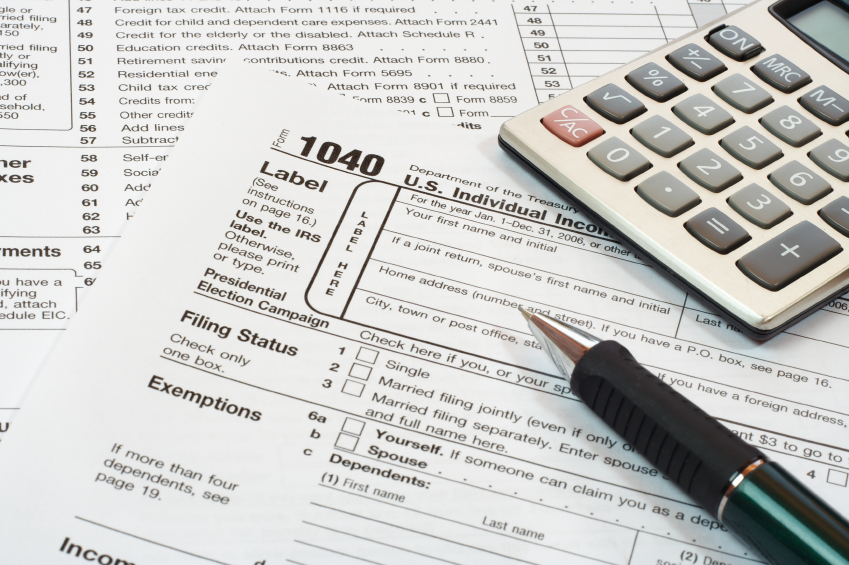 Just when things start to mellow out, I can feel Uncle Sam reaching deep into my already emptied pockets. It's that time of year again when W-2 forms show up in the mailbox, numbers get crunched, and taxes get paid.
Tax
Considering all the things that taxes are used for I guess they aren't too terrible, but they certainly don't help my situation financially as a student in plenty of debt. Once all the government documents arrive and get filed we get to file even more as students.
It wouldn't be possible to pay for school without a little help from the government. Therefore, completing the FAFSA and other scholarship opportunities permits my education to continue. Considering some of the tax breaks, the process a little more bearable (thank you new house). I certainly don't mind being able to file taxes for free.
Expenses
As the numbers become quite important, I thought a running total of expenses for Touro University Nevada's College of Osteopathic Medicine would be appropriate.
- Tuition - Roughly $37,000
- Books - $1000.45 (Used and new)
- Equipment - $1,550.65 (Laptop, lab coat and diagnostic tools)
- Clubs - $40
- Extra - $202.29 (Software, vaccines, etc)
Clinical Corner
Epistaxis (Nose bleed)
Research says that about 90% of nose bleeds occur as a result of damage to Kiesselbach's area. It is found in the front part of the nose and has a rich blood supply. The predominant reoccurring trauma is caused by fingers that are doing too much scratching. A smaller percentage comes from the back of the nose that cannot be reached by fingers which often requires medical help. Stopping a nose bleed may take time, and is good knowledge to have if you ever need it.
Sunday, January 25, 2009
Cranial Nerves
 This weeks dissection finally came to a head, literally. We sawed into the skull to remove the most important and complex organ in the body.
The Brain
It was likely the most fascinating dissection yet and breaking the brain into its parts and functions has been no simple task. With a test slated early this week, we are feverishly cramming as much information, as humanly possible, into our own heads.
Specifically, the cranial nerves pose a threat to a decent grade. In an effort to help the student who has to learn them too, I have included resources that I found to be beneficial. These include memory aides, mnemonics, charts, and more. If you have suggestions of your own, please post them in the comments to share.
Cranial Nerves
- David Darling online encyclopedia - includes great links to individual nerves
- Chart including nerve components, functions, and pathways
- Extensive list of mnemonics
- Easy memorization technique for the nerve components (shown below) by a former student
"Great Virginia, Sweet Virginia, G Veg Save! SSA does two and eight."
The "G Veg Save" part confused me at first – obviously it helps you remember to list GVE, but then you continue onto the next line so you can finish spelling "Veg", giving you a lonely G. So you finish that line with a "SA", then put "SVE" on the line after that, so that you (sort of) spell "SAVE." Giving you:GVA –
SVA –
GVE –
GSA –
SVE –
SSA – II & VIIINow, which cranial nerves have a whole bunch of components in them? VII, IX, and X, right? So fill in the list like this, leaving spaces as indicated – the GVA list is complete and doesn’t need a space:
GVA – VII, IX, X
SVA – ___, VII, IX, X
GVE – ___, VII, IX, X
GSA – ___, VII, IX, X
SVE – ___, VII, IX, X
SSA – II & VIIINow, start counting in odd numbers to fill in the spaces (you’ll use V twice, otherwise you’d be listing VII twice for SVE. So your list looks like this now:
GVA – VII, IX, X
SVA – _I_, VII, IX, X
GVE – _III_, VII, IX, X
GSA – _V_, VII, IX, X
SVE – _V_, VII, IX, X
SSA – II & VIIIAdd XI to the SVE list, because it belongs there.
GVA – VII, IX, X
SVA – _I_, VII, IX, X
GVE – _III_, VII, IX, X
GSA – _V_, VII, IX, X
SVE – _V_, VII, IX, X, XI
SSA – II & VIIISo what’s missing? Of course, GSE! And for GSE, list the cranial nerves that don’t show up anywhere else in the lists, plus III.
GVA – VII, IX, X
SVA – _I_, VII, IX, X
GVE – _III_, VII, IX, X
GSA – _V_, VII, IX, X
SVE – _V_, VII, IX, X, XI
SSA – II & VIII
GSE – III, IV, VI, XII
Best of luck to all those who have to endure this complicated study. For more enlightening materials discussing the brain, consider these books.
Sunday, January 18, 2009
Upon Further Examination
 To fully investigate all aspects of my experience, I'd like to welcome my wife as a guest blogger for this week's post. Consideration of those friends and family members who are affected by my decision to attend medical school is important - especially since I'm married.
Willow
Thanks for the invitation, Josh. Here's my two cents on, Life as a Medical Student's Wife:Thanks for sharing Willow, you have been extremely supportive and flexible. To see what she has been up to lately, check out her Fresh Squeeze.
I was fortunate Josh knew he wanted to pursue medical school when I met him six years ago. Witnessing the satisfaction he received from previous involvement in the field has been crucial in helping me to be continually encouraging throughout the constant requirements and expectations that school demands. Although I'm not the one sitting in front of a book every night trying to soak in endless pages of information, medical school for me has been equally demanding of my time- and lack of time- with my husband. It has been crucial that I involve myself in my own career, community and personal interests as diligently as he is involved with school. Without my own schedule, having a husband in medical school would never work for me.
Moving to a new location, regardless of the field of study you are entering, always integrates a period of transition. Fortunately my career moved with me, so I did not have to find a new job, but socially it has been difficult to find women in the Las Vegas area who are not solely interested in clubbing on the strip, shopping or eating out for entertainment. Since I work from home as a designer for a company out of state, the ability to connect with women in the work field is difficult. So, I started teaching yoga at a gym and have found many interesting people from all walks of life congregate for fitness. Having an additional social outlet outside of my marriage has been integral in keeping my personal sanity during medical school.
In my Utopian ideals, I believe you should connect with your spouse on a daily basis. Early in our marriage I read it was important to have at least 20 minutes alone everyday with your spouse without interruption in order to maintain a healthy relationship. That usually happened. Since medical school, I have learned to be flexible regarding how, when, and where that connection happens. All the wives I've talked to dread block weeks- I am lucky if I get five minutes of undivided attention. I'm also left doing all of the "chores" on my own, and suddenly I realize just how often Josh really does the dishes. The school let us know up front that the schedule would be demanding, and our relationship has had to adjust to those demands. Having that forewarning has helped us keep the demands in perspective and adjust our needs appropriately. Sometimes this happens more easily than others.
Clinical Corner
Tools of the Trade
Learning clinical skills requires knowing how to use the tools at our disposal. Diagnostic sets that include an otoscope and ophthalmoscope come in many shapes, brands, and styles. Welch-Allyn tends to hold the gold standard in this arena and rightfully so. They guarantee their products to students as long as they are in medical school or residency. With that, the prices don't seem so bad.
Although my wife is greatly supportive of my endeavors, she still has a hard time swallowing how this small package of tools can be so costly. Thanks for sitting patiently as I used my new equipment to practice my exams, did I mention how great your eardrums look?
Sunday, January 11, 2009
Financial Pill Popping

With a new year comes new policy that may have significant change in how future physicians practice medicine. The Pharmaceutical Research and Manufacturers of America (PhRMA) has adopted a new code of conduct that goes into effect January 2009.
Prescription
Making drugs to fill prescriptions is a difficult task requiring years of research, money, and physicians who will prescribe them. A large sum of money is used to buy cheap pens, "free" lunches, or even more lavish gifts that entice clinicians to write a prescription for the latest wonder drug.
PhRMA has revised their code of conduct to put an end to the handouts among their distributing members. Freebies would otherwise raise the ethical question, "is my doctor prescribing this for my best interest or theirs?" Since handouts cost money, drug companies have to increase the cost to the consumer to pay for them. Why not spend the money to produce better pharmaceuticals through well funded research using the money allocated to the 'perks' column in the budget?
Medical students and practicing physicians alike will have to adjust to drug reps without cheesy stationary and edible giveaways. Perhaps the students will be fortunate to never know this ethical dilemma. Although the code attempts to curb the compensations, pharmaceuticals still remain a business that will get money in its pockets any way it can.
Clinical Corner
Blood Donation
After years of putting it off, I finally donated my blood to help the cause and it just so happens to be the National Blood Donation Month. It cost me one hour, one pint of blood and a couple signatures. In return I received one hole in the arm, a purple bandage wrap and the opportunity to help treat and potentially save the life of a patient as a medical student. Blood banks are often in great need of donors as so many patients require transfusions. If you are looking for a great way to serve, consider donating blood and helping those in need.
Sunday, January 4, 2009
Semester Two
 The vacation is over and it's time to get back to work. Our semester looks to be packed with all sorts of fun.
New Year
With the new year, of course I would like to say that my resolution to study late into the night every night and stay on top of things is fitting. I know myself better than that. Although I intend to be diligent, the faculty at Touro University have also scheduled quite the load this time around.
We will finish our anatomy studies which will be replaced with neuroscience. From the second year students we hear great things about this course's difficulty. I'm sure it will show up here in some form of stress relief. Histology, physiology, OMM and physical diagnosis will continue to be a part of the curriculum throughout the remainder of our first year experience. To top things off they have included a medical jurisprudence course. Don't ask me how, but apparently this semester has less credit hours than the previous.
Being ill for the greater part of the holidays may have put a damper on things, but my recreational side could not be deprived. After all, I live in Fabulous Las Vegas and had to take advantage of the time away from school. Had I purchased all the needed books and equipment at the begining of the year, there is a good chance I wouldn't have even thought of school over break. In the meantime I am enjoying the remaining hours of my vacation. I hope you have a great and happy new year.
Sunday, December 28, 2008
Influenza
 In the midst of the holiday season all I can think about is vacation. My body has officially decompressed and made the attempt to relax. In so doing, my stress compromised immune system leaves me vulnerable to illness.
Illness
With the visiting family gone, repeated meals of overeating, and very little fresh air, one of us were bound to get sick. Unfortunately, a few of us have and are doing our best to relish the remainder of our days off to return to normalcy. I do not fully understand all the bubbly noises and queasy feelings my abdomen has, nor do I understand the common sore throats and nasal congestion some of my family have to endure.
It makes me wonder what I would have done if I was completed with medical school and considered a physician in the eyes of those close to me. Would I suggest they see their family doctor or would I attempt to diagnose their symptoms? There is so much more to learn. In the meantime, I am watching Google's latest gadget - FluTrends - which is provided with help from the Center for Disease Control (CDC).
Using their time-tested search technology Google has honed in on specific search terms and put them to good use in identifying the spread of influenza. The CDC recognizes that Google FluTrends is able to show flu spread more readily than reported cases could.
Clinical Corner
Influenza
This viral beast can be the cause of much misery. Fortunately, there is an annual vaccine that attempts to fight the most common strain of the flu to help ward off potential illness. The CDC informational website regarding all things influenza.. In the meantime:
- Keep an eye on the FluTrends in your area (Historically February has the most cases)
- Reduce exposure to those who are infected
- Wash your hands regularly
Sunday, December 21, 2008
A Welcome Vacation

This is essentially what I have looked like for the past five months. If my nose wasn't in a book looking for the answer, it was likely that I was in lecture or group study.
First Semester
The semester has come to an end and the final grades are not yet posted. Exams were an extremely nerve racking experience to have spent so much time preparing only to find I was partially being tested on the material I didn't review in detail. Fortunately, I had plenty of house to clean and other projects to occupy my time while I mulled over my responses. After a weekend of making furniture, I think I am prepared to see my grades for better or worse.
Overall this first semester started as an exhilarating experience. When the novelty of it all wore off and each day blurred into the next, the reality of medical school sunk in deep. Hard work, all the time. Coming into this I knew it would be the case, but the three classmates who dropped out didn't know what was coming. Medical school is difficult and rewarding at the same time. I am still very excited to be learning the art of medicine and have a much greater respect for the practicing physicians who have endured through a similar experience.
Living in Las Vegas I didn't expect to have a 'White Christmas', but we were all surprised when 3-8 inches of snow fell on our city. As the last time this happened was 30 years ago, everyone was in shock. The worst part yet is that schools were closed for a day including Touro, despite the final exams. As if that didn't add to our stress. Coming from a rich background in snowfalls much greater than 3 inches, I had a hard time swallowing a 'snow day'. Oh well, now to enjoy my two weeks of vacation before heading back to the grind.
Clinical Corner
Dietary Fiber
With oversized holiday meals, excessive treats and plenty of unhealthy goodies to temp us, I thought a healthy alternative would be good to discuss. Foods rich in fiber have many health benefits that we can not afford to neglect for now and our future.
Better than the sprinkle on fiber supplements are the foods with natural fiber (grains, fruits, vegetables etc). Benefits include:
- Relieving and avoiding constipation - Fiber absorbs water making it easier to pass food without straining the bowel.
- Prevent diseases - Cancer, heart disease, diabetes, diverticular diseases, and kidney/gallstones
- Weight control - In addition to giving the feeling of satiety, fiber will bind to bile made in the gallbladder. Bile is used to break down fats in the diet. Normally, very little bile is lost, but when bound to fiber it is removed from the body in greater quantities and the body loses bound cholesterol more readily.
Sunday, December 14, 2008
Exam Week Three

Our last exams of the semester are finally here. Although they may not be exciting, it sure is nice to know there is a vacation only one week away.
Anatomy
Most recently we have focused our attention on the pelvic cavity and perineum in anatomy. This highly compact region holds an extensive network of veins, arteries and nerves that nourish organs of the reproductive, urinary and gastrointestinal systems. At first it seemed to be a mess of structures running this way and that with occasional stops at an organ or muscle. Now after hours of dissection, review and reading I think I have a better grasp on this intricate part of the body. While in the cadaver lab late at night and well into the next morning, my mind turned to those who have shared their bodies with us that we might be better physicians...if they only knew how much knowledge they have imparted.
I continually think of how lucky some of us are; to be in a healthy state is quite a feat. There are many problems that could arise during embryological development causing complications that would alter life, if it was even sustainable in the first place. The combination of embryology and the life giving organs of the body go hand in hand. It is amazing how everything works in concert to produce the person we see in the mirror.
Clinical Corner
Ectopic Pregnancy
Ectopic refers to a congenital displacement and in this case it is the fetus that has not implanted in the uterine wall. In the uterine (Fallopian) tube, the woman's egg will be fertilized by the sperm. Normally, they implant on the wall of the uterus to develop over the next nine months. When the fertilized egg implants itself elsewhere, it is considered ectopic.
Common sites of implantation include the lining of the uterine tubes, ovaries, the abdominal cavity or even the lower inner portion of the uterus. Depending on the location, it can be difficult to diagnose as ultrasounds are not always clear. Pain can result which often brings the mother to find medical help. This condition is a medical emergency as it can rupture the maternal organs or other structures within the abdominal cavity. Hemorrhaging (excessive bleeding) is possible, but the greater concern is for the mother's reproductive organs. Once they are damaged, it is likely that they must be removed and thus the likelihood of fertility decreases.
Rare cases have been reported where the fetus has grown to full term and been delivered. Although the causes are not fully understood, it is thought that damage to the uterine tubes may lead to an increased incidence of ectopic pregnancies. (Books to consider :Ectopic Pregnancy, Pregnancy)
Sunday, December 7, 2008
Cardiac Physiology
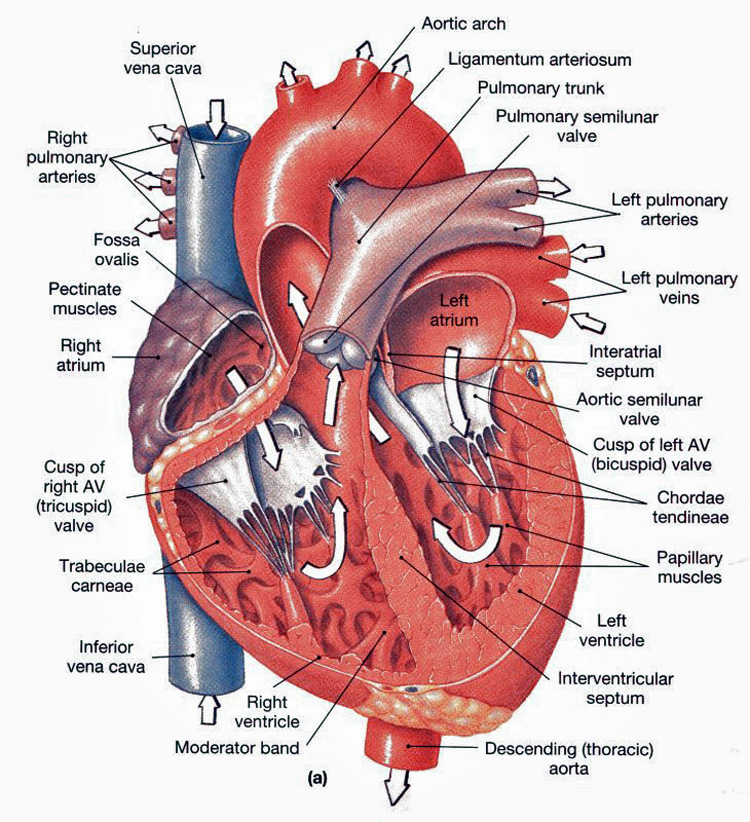
Cardiovascular System
We spent the majority of this past week learning the cardiac and systemic blood flow. As it moves through the chambers of the heart, to the lungs, back into the heart and ultimately into circulation, the blood provides nutrients to the body that sustain life.
Lectures went beyond the anatomy and included cardiac histology for completeness. The physiology or functional breakdown of its parts gets quite complex. Through hormonal, neural, and metabolic control blood vessels change size to distribute the blood where it is needed most. This regulation is a core consideration for many diseases as the blood affects every body system.
During our Physical Diagnosis lab we attempted to hear the many heart sounds on our partners and associate them with the various actions that were occurring. If you have ever tried this, you will agree it is definitely a learned skill. No wonder cardiologists are consulted so often. In my research, I came upon the blog of a cardiologist/electrophysiologist from the Midwest that may be of interest to those considering cardiology as a career. Dr. Wes, as he is known, gives a great peek into the life of a specialty physician. As I am still trying to decide what field to work in, this was a good starting point to explore.
Clinical Corner
With so many cases, conditions and diseases that come up I thought this would be a good forum to mention them both for my memory and for your reading pleasure. Should you happen to find information that is incorrect or interesting that you would like to add, please leave a comment for others to read.
Atrial Fibrillation
After a week of cardiology I could not resist considering an abnormal heart condition. Of the four chambers of the heart, the two atria receive blood from the body or lungs. Blood is pumped from an atrium into a ventricle as it continues on its way. This occurs as a result of electrical activity that starts in the atrium which moves by conduction to the ventricles. In a normal functioning heart, the rhythm is synchronized to move the blood through the chambers in order.
In a heart that is experiencing atrial fibrillation the conduction system is does not effectively reach the ventricles and the atria shake erratically. This will decrease the flow of blood and ultimately oxygen to the body with a potential risk of clot formation. This commonly leaves the individual weak and uncomfortable. This is one of the commonest heart problems and can be treated with medications or more invasive procedures if necessary. This video provides a more detailed look at atrial fibrillation.
Like you have heard it before, "use it or lose it." Regular exercise and a healthy diet will keep your heart and blood vessels in shape to meet the demands of everyday activities. Don't take good health for granted and your heart will thank you.
Sunday, November 30, 2008
Gratitude

The Thanksgiving holiday was a much needed break from the rigor of constant studying. Now it is time to buckle up and hold on tight as the last couple weeks before our final block exams of the semester arrive. Playing 'catch up' and trying to absorb the upcoming information will be quite the task, but the winter interim provides enough days off to be an encouragement for focused studies now.
Thanksgiving
You would think that after months of dissection techniques have been explored and a variety of human tissues cut that some skill would be honed. As I attempted to carve my first turkey this year, I learned that human dissection and fowl carving are two completely different activities. As such, I had to censor my dinner table commentary to avoid unsettling the stomach contents of those in attendance. Despite holding in my joy for anatomical discovery, the feast could not have tasted better or come at a more appropriate time.
The opportunity to visit with family and reflect upon everything I have has left me truly grateful. It is often a simple thing to look at all the stress in life and wish it was lessened. I feel that the hard work we put into our goals and ambitions will often pay off with a greater sense of achievement when stress is overcome.
Medically Speaking
We are all indebted to those who have spent countless hours researching medicine throughout history. It is from their dedication that we have today's medical knowledge. More importantly are those who suffer from illness and seek care. Their trust in the medical system allows the practice to become better and gives a purpose for the continual research.
These patients will ultimately make us the physicians we are trying so hard to become. Whether difficult cases or unstable personalities, they have the power to shape our medical experience for good or bad. I often think back to the feelings I had while working in the Emergency Room with patients. With my limited knowledge and experience I was still able to make a difference in the lives of others through medicine. The smallest of compliments or gestures of appreciation often had a significant impact on my opinion of healthcare. Although needless to say, I am looking forward to working with the patients again in the clinical setting. In the meantime, my family and friends seem to appreciate what I bring to the table, and for that I am grateful.
Sunday, November 23, 2008
Manipulative Treatment
 Biped creatures such as ourselves put a lot of force on our feet plaguing us with unnecessary pain and discomfort. Fortunately, there are ways to provide a needed respite for sore, worn out feet. When massage leaves you aching, osteopathic manipulative treatments (OMT) may be an easy solution.
Osteopathic Manipulative Treatment
As osteopathic medical students, we routinely learn the manipulations of our practice. Various techniques allow us to fill our toolbox with multiple solutions to common structural problems. Most recently we have been working with the lower extremities including the feet.
After getting over the initial distaste of handling the feet of our colleagues, we set out to learn the principles that would heal our future patients. These treatments focus primarily on the muscles, bones, and connective tissues in an effort to relieve pain or discomfort.
As my best friend is commonly involved in activities that put great amounts of stress on her feet, it came as no surprise that she had started developing pain one morning. Before running off to class, I was able to employ some of the skills I had learned previously to 'reset' her foot and relieve the pain she was experiencing. Amazed, she let me know the pain was gone, which I initially thought was her way of making me feel better about myself. She assured me that this was not her intention and that the techniques had actually improved her level of comfort.
Little by little we are gaining the pieces of knowledge that will make us better professionals and physicians in the work place. I was fortunate enough to be able to use those skills at home and witness first hand, the positive effects of OMT.
Anatomy
Sticking to the lower extremity, I thought I would discuss the latest news in the anatomy department. With the thorax and gastrointestinal contents of the abdomen behind us, we have started our examination of the spinal cord and perineum. In order to get a better look at the structures involved, some intense dissections had to be performed.
The first was a laminectomy where the outer coverings of the vertebrae were cut away to reveal the underlying spinal cord. It is amazing to think that this well protected and delicate structure carries impulses that permit control of most of our body.
The second dissection required the removal of a leg as high up as the belly button, which included part of the lower spine . This exposed the contents of the groin for inspection while being able to observe the organic proximity of reproductive, urinary and gastrointestinal structures. I never imagined having to remove an entire limb for that purpose, but it gives us a better appreciation for the anatomy we are studying.
In only a month's time, we will have completed our first semester of medical school. It is exciting to think that we have made it this far and are slowly seeing goals become a reality.
Sunday, November 16, 2008
Balance
 It seems that every day is another drain on the energy built up during the few hours of sleep the night before. Do I still have a life outside of school?
Balance
When final exams are done or in my case the week of block exams, it becomes much easier to slow down the pace as far as studies go. Unfortunately, the material continues to come unrelentingly. Finding balance in student life can be a difficult task and some days I find myself deep in an anatomy book, where other days I am ready to sit back and watch a good movie.
There is no right way to do it, and every student has to learn what works for them. Let's face it, studying until 11pm or later is definitely possible with all the information available, but is it the best thing to do, or will it lead to burnout. I have actually found both to be true. Constant stress with little relaxation or time to get away is similar to the "all-nighter" mistake many of us have made. On the other hand, not studying enough when quizzes, exams or boards are approaching could be costly.
Personally, I have found that a dedicated time allocated to sufficient review of materials on a constant basis will actually reinforce important principles and topics. Leaving enough time for meals, sleep, and exercise is crucial to balancing the mentally heavy load of medical school. It may be wise to set up specific hours each day for study, sleep, exercise etc so that your body gets into a rhythm. This will make study time more effective while ensuring you get the most out of your free time.
Loose Ends
Now almost four months into the curriculum, I am starting to feel a little more at ease with the whole medical school experience. With time I have become more organized and oriented as to what is expected of me. There are still a lot of questions to be answered down the road, but for now the stress associated with the 'unknown' is being whittled away.
TUNCOM is making progress in their ongoing accreditation process. As one of the newer medical schools, it has to show the accreditation board that the curriculum is sufficient and that students are getting the education they seek. Policies and programs continue to change, developing the already well structured programs. The rapidly growing student body compounds this process, however, as we were able to meet with the board and discuss the matters that concerned us most. Even as a new student it is nice to be heard.
I am continually amazed at how much we learn in such little time. Trying to absorb anatomy, physiology, biochemistry, histology and everything else has definitely kept me busy. If we keep learning at this rate, I will have more information than room to store it.
Sunday, November 9, 2008
Exercise
 I have come to a depressing realization. Being a medical student definitely has its financial drawbacks and sitting at a desk all day taking notes does not come close to the lifestyle physicians encourage.
Move
After spending the last two weeks studying late into the night preparing for exams, I rarely found time to get up and use all the pent up energy I consumed at meal times. Stress levels remained high, lethargy dragged me down, and jiggly body parts just drove home an important message...I need to get up and move a little more. Certainly, this is easier said than done, but if I will be instructing others to change their habits, why not change my own?
Exercise has been researched and studied for years. It is one of the few things we do besides eating that actually affects all of our body systems. Current recommendations suggest at least 30 minutes of cardiovascular exercise most days of the week. This could be anything from walking, swimming, or even the latest craze, Nintendo Wii Fit. Moving regularly will enhance mental and physical performance in addition to changing how we react to everyday stress.
Healthy Living
When it comes to living healthy, there are more resources available to us than we could possibly imagine. You don't have to be a member of a local gym or spend large amounts of money to reap the benefits of good health, but it does take dedication and a desire to experience true fitness. During my undergraduate studies, my professor Dr. Zimmerman said, "the best thing you can do for your body is train a marathon...the worst thing you can do for your body is run a marathon." I would love to run a marathon someday, however, I am not quite in a position or mindset to do so now. For the time being, I plan to concentrate my efforts in three areas: nutrition, strength, and cardiovascular.
Nutrition has changed significantly with restaurants offering large portioned meals at reasonable prices. This does not guarantee that what you are eating is any healthier than the alternative of cooking for yourself. The government sponsored food pyramid helps us balance our diet to ensure we are getting the right nutrients. When it comes to cooking, AllRecipes.com helps you put together meals with the ingredients you have on hand. I will be honest in saying I like to eat, therefore I will be focusing on proper portion sizes as well as caloric content when satiating my hunger.
Strength exercises are vital to maintaining bone strength and muscle tone, something I have been lacking as of late. I am planning to start out each day with at least 10 minutes of strength training. With very little time and less to do in the mornings, I feel this is a reasonable goal for starters.
The part I miss most in my healthy habits is a good dose of cardiovascular stress. With just enough I can keep my metabolic pathways in check, maintain a healthy blood pressure, and rid my body of toxins simply by getting the fluids moving. There are some great tools on the market to help measure your success. A pedometer is an inexpensive way to measure how far you move and a heart rate monitor is ideal for determining how your body responds to your workout. Both are reasonable for the novice as well as the pro.
DVDs make at home training simple, unless you prefer detailed books, nevertheless, the most important part is that you make it a habit to move. I would love to hear if you have any other suggestions. And to all the plastic surgeons, I am sorry, but you will likely not be seeing me soon.
Sunday, November 2, 2008
Exam Week Two
 Highlighting the culmination of the last six weeks, this picture does not give justice to the vast amounts of knowledge one can obtain from studying the actual anatomy.
Anatomy
Our anatomy course has most recently led us into the depths of the human thorax and abdomen to explore the respiratory, cardiovascular, nervous, and digestive systems located in these cavities. At first the information never seemed to end until I realized it was likely there would be no end. With our second week of exams already here, I continue to find things I did not learn the first time around.
It is for this reason there are medical specialists who know everything there is to know. Obviously, medical school is the learning grounds for medical knowledge and is meant to be the foundation for a successful career in the field.
Complexity arises where every individual is different. Slight variations in anatomy, surgeries, and body mechanics make the anatomical studies unique with every cadaver. Despite the hours of time spent with one, the next may have alterations that tell a different story. Physicians learn what occurs most frequently and divergent findings become the abnormalities to be treated. Although anatomy may be a difficult subject, if we do not learn it now, we will have to do it later. Learning it now while I have the time seems to be the better choice.
Exam Preparation
Exam block week 2 is here and I am starting to wear thin. Long days of lecture and late nights of reviewing past material is exhausting work. I am realizing that my first exam week was a training period for study habits. Rather than starting early, I started late, causing excessive unneeded stress. This time around, my study group made a concerted effort to dedicate more time to our review of materials early on. It sure has made a considerable difference in the stress levels since cramming is not an issue and I actually get to sleep at night.
Here's to a good week of exams, remembering all the important points, and getting enough sleep each night to be able to function properly the next day. And if Friday can hear me, please get here quick.
Sunday, October 26, 2008
Endocrinology
 Hormonal regulation is much more complex than I first imagined, but it is incredibly interesting too.
Endocrine System
Our recent studies have initiated investigations into the complex world of glands and their secretions. Complemented by histological examinations of cellular breakdown, endocrine physiology, too, has been presented for study. Our first stop was the pituitary followed by the thyroid.
The endocrine glands regulate bodily functions trying to keep us in a healthy state. When secretions become too low or too high, normal functions are compromised and disease ensues. The thyroid in particular has me quite fascinated, perhaps due to recency.
Thyroid
This butterfly like gland found just below our voice box controls many functions and is most commonly known to have an effect on our body's metabolism. It requires a minimal level of iodine from our diets which can be found in many water sources, salt, meat, fish and vegetables. In cases of hyperthyroidism (too much hormone) individuals commonly lose weight and have tissue swelling. The opposite, hypothyroidism, causes weight gain and can lead to the growth of thyroid tissue also known as a goiter. As with every other part of the body, thyroid cancer can have deleterious effects similar to those mentioned above.
These are only some of the effects of thyroid hormones and many others are integrated with various body systems. My first thought was why not give low doses of thyroid hormone to help people lose weight. It sounds like a rather easy solution until you start to factor in all the other problems that would arise from altering the normal hormonal levels. Needless to say, I am still a neophyte when it comes to all of this, but for the moment it piques my interest.
Elections
Politics have never really been of interest to me. In fact, I have chosen not to vote until now, which has been the stem of many arguments in the past. I reason that if I can not be an educated voter, it does not benefit anyone to cast a vote based on public appeal or photographic prowess. With all my time off during the holidays, I took a moment to become politically educated in an effort to participate in the upcoming election.
With a future career in the balance and a basic understanding of the current candidates, this election was the first in which I have participated. Here are a few references that simplified my hunt for knowledge:
- Register to vote online - Simply fill out the form, print it and mail it in
- Presidential candidates - Compare, side by side, the officials running for office
- Local candidates - Get to know your state and local candidates
- Voting - Learn where your local voting station is and the hours they are open
Tuesday, October 21, 2008
Histology
 The histological remains of an embryonic chicken undergoing endochondral ossification is quite a beautiful site. (The images come from Dr. Thomas Caceci, who details the properties of bone formation as part of a histology course.)
The Chicken in the Egg
Using specialized staining techniques, this skeleton takes on two very contrasting colors as a result of the cellular make up in the various structures. The dark red is calcified or hardened bone whereas the lighter blue shows cartilaginous features that are not yet bone.
Through this process of bone formation from cartilage, bones elongate and like animals, we grow. In adulthood, this image would have a stark contrast where the majority would appear to be stained red. Looking at the junction of bone and cartilage, we enter the world of histology.
Histology
Affectionately called "histo," this course in cellular anatomy is rather beautiful. At first exposure it is difficult to see past the bubbly circles, fancy colors, and wavy lines. The meanings of each are crucial to understanding what you see in the microscope. When the initial shock of looking at what appears to be the drawing of a toddler, it is actually exciting to understand the defining features of a histology slide. Perhaps it is the nerd in me, however, this is where we see photographs of medical pathologies. This is what we commonly view when we are attempting to identify and study structures. This image captures the border between the hard bone and the soft cartilage (aka. the epiphyseal plate). A close look would show the cartilage cells maturing as they progress towards the bony portion.
We study skin, glands, bones, and every other part you could imagine. Each has identifying characteristics that "tell a story." Not all stains are created equal and a variety of colors are available to bring out unique attributes in each slide.
Physicians use histology for the purpose of finding illness or its causes. Muscle histology for example is performed from a muscle biopsy or sample and can be used to diagnose specific diseases identifiable in the specimen. Histology jobs are common in laboratories as many tests will determine the doctor's treatment.
Resources
Many great resources are available if you are looking to brush up on your cellular knowledge or simply enjoy unique images. A microscope and expensive slides are not necessary. Histology atlases and other texts have phenomenal photographs that may be interesting even if you are not taking a course. To think that our bodies are made up of such tiny structures that are vital to proper functioning is mind-boggling.
Sunday, October 12, 2008
Sukkot
 The month of October has been great as far as vacation time away from school. We only attend classes two or three days a week. With all this time off, it is hard to motivate oneself to study intensely. In the meantime, I have researched the observed Jewish holidays and enjoyed my break from the books.
Sukkot (sue-COAT)
Commonly referred to in prayer as the "Season of Our Rejoicing", Sukkot falls five days after the holiday Yom Kippur and is the last of three pilgrimage festivals in Jewish tradition. The word Sukkot means "booths," which is used today as a symbolical reference to the temporary shelters used while the children of Israel wandered in the wilderness for forty years.
This holiday is often referenced as the "Feast of Tabernacles" as the holiday was dually associated with the festival of the harvest. Sukkot extends over a period of seven days and the use of a sukkah (singular form of sukkot) for eating and sleeping is encouraged. I was amazed to see the diversity in adherence to this commandment that brings to mind thoughts of the wandering children of Israel.
Sukkah come in all forms and can be seen in many predominantly Jewish communities. Local restaurants provide them for Jewish patrons, some companies offer portable options, and with space permitting, they may even be seen on the balconies of some dwelling units. Traditionally, they are small enough to cover the food table and those who dine under the sukkot.


General requirements for the sukkah are as follows:
- At least two and a half walls
- Covering - Something cut from the ground (tree branch, stalks, etc)
- The top is not to be tied together, but laid out loose
- Rain covers may be used when not fulfilling a mitzvah
"Arba Minim," as it is known in Jewish culture, is a ritual that employs four plants to "rejoice before the Lord." It is believed to have an agricultural significance as well as symbolic variation among Jews. The four plants are as follows:
- Etrog -a citrus fruit, commonly a lemon
- Lulav - a palm branch
- Aravot - two willow branches
- Hadassim - three myrtle branches
Some believe this holiday to be similar to the adopted Thanksgiving practiced in the United States. Now you can say you are in "the know." Chag Sameach.


